 Back
Back







 FACEBOOK
 Pinterest
 Instagram

 FACEBOOK
Pinterest
Instagram
FACEBOOK
Pinterest
Instagram
Moody skies that change in the blink of an eye, historic castles galore, charmingly chatty people imbued with a clear love of the local terrain and culture — welcome to the Scottish Highlands. Whether your frame of reference is shaped by shows like Outlander or movies like Highlander, you are no doubt picturing wooded hills hung thick with fog and wind whipping over the heather-covered moors. And that is exactly what you will find in the north of Scotland. The air hangs expectant with what might be coming and the history is almost palpable. What better way to truly immerse yourself in this majestic beauty than by traveling through the thick of it by barge cruise?
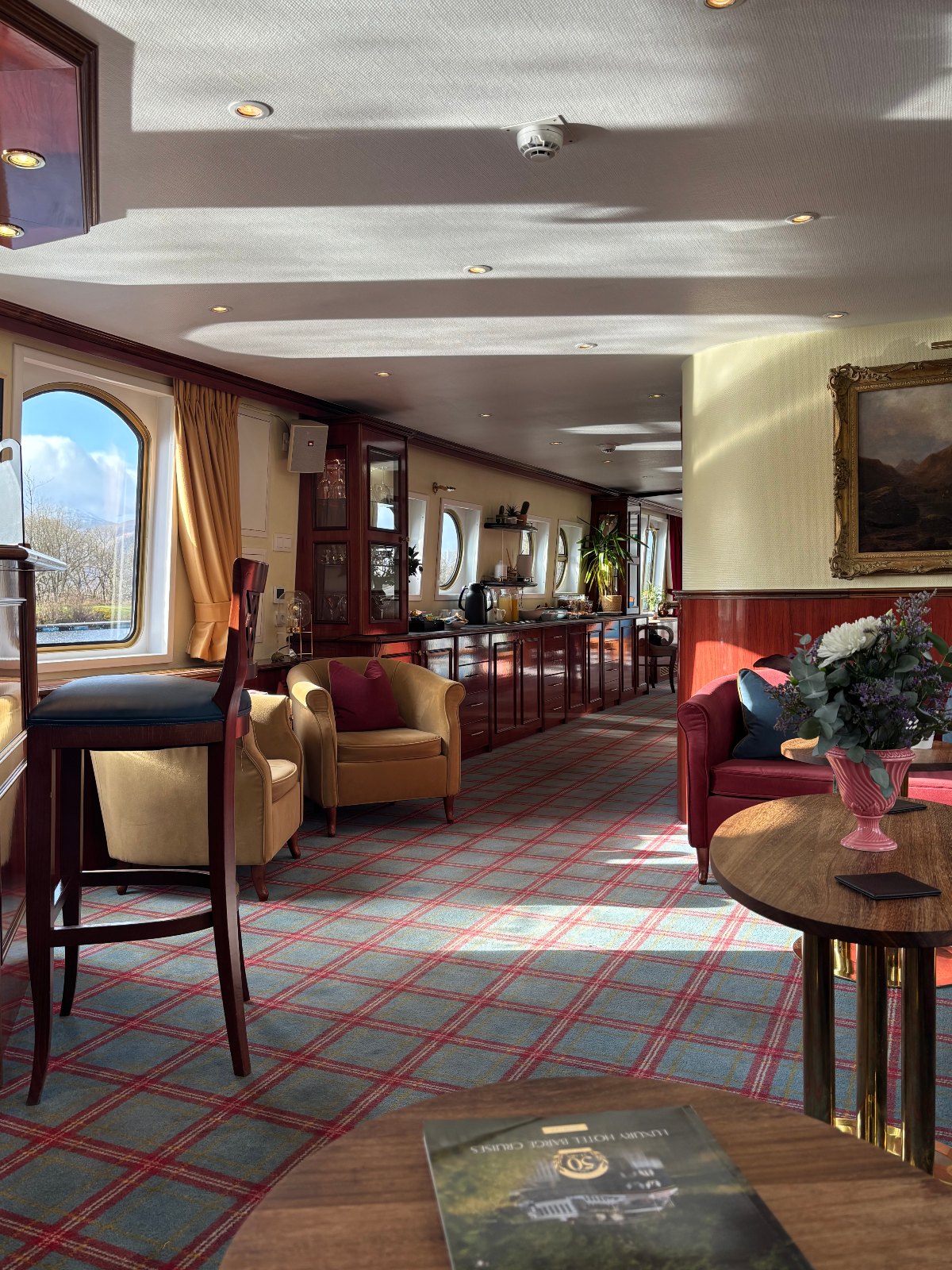
A barge cruise turns most of what you might expect from the word “cruising” on its ear. Throw away all your notions about mass tourist vibes and lengthy journeys in open water. Instead, think of a quaint hotel that happens to be floating along a canal; leisurely days spent at an enjoyable pace; extremely small guest numbers (hovering slightly under or over 10); intimate environs; and an ability to be truly ensconced in the region. Couple that with the added benefit of being able to pivot on a dime based on changing weather or needs, and you have a winning holiday.
Barge cruising is somewhat familiar in countries like France, where cruises through the Canal du Midi, Champagne and Burgundy have been drawing wine lovers for years, but the Caledonian Canal in Scotland is a compelling choice. Spanning the stretch of the Highlands between Inverness and the Fort William area, it was built (by hand!) between 1803 and 1822 as a way to create an inland shipping route by connecting various lochs (lakes). Our cruise on the Spirit of Scotland with Barge Lady Cruises traversed scenic sections of the canal along Loch Lochy, Loch Oich and the infamous Loch Ness.
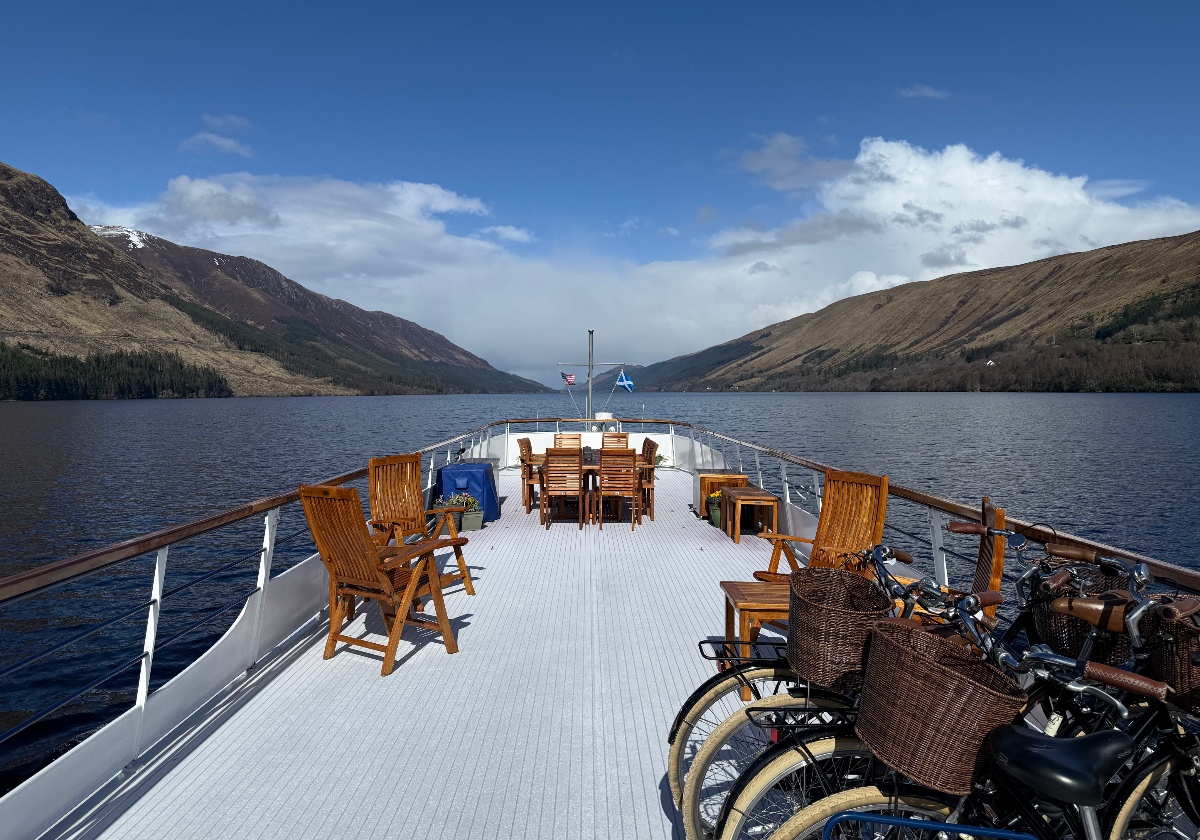
At only 17 feet wide, the Spirit of Scotland effortlessly glides through the Caledonian Canal. She is slightly smaller than the width of a pickleball court but has everything you could want in a well-appointed vessel. There’s a lovely flat-top deck for relaxing and viewing the scenery, and a spacious main floor with a dining room, a salon and a bar, as well as a covered patio and a whirlpool tub. On the lower level are six ensuite guest cabins, each benefitting from twice-daily housekeeping. You could not wish for more.
Even though the environs are welcoming, there is also plenty of opportunity to come and go as you please and enjoy the area around the canal. Cruising each day only takes a few hours, so while moored, you can hop on and off at your leisure for a walk or even a ride on one of the bikes kept on board for guest use. During our trip, we enjoyed many walks, a few runs and a cycling outing to a nearby nature preserve and sea lock.
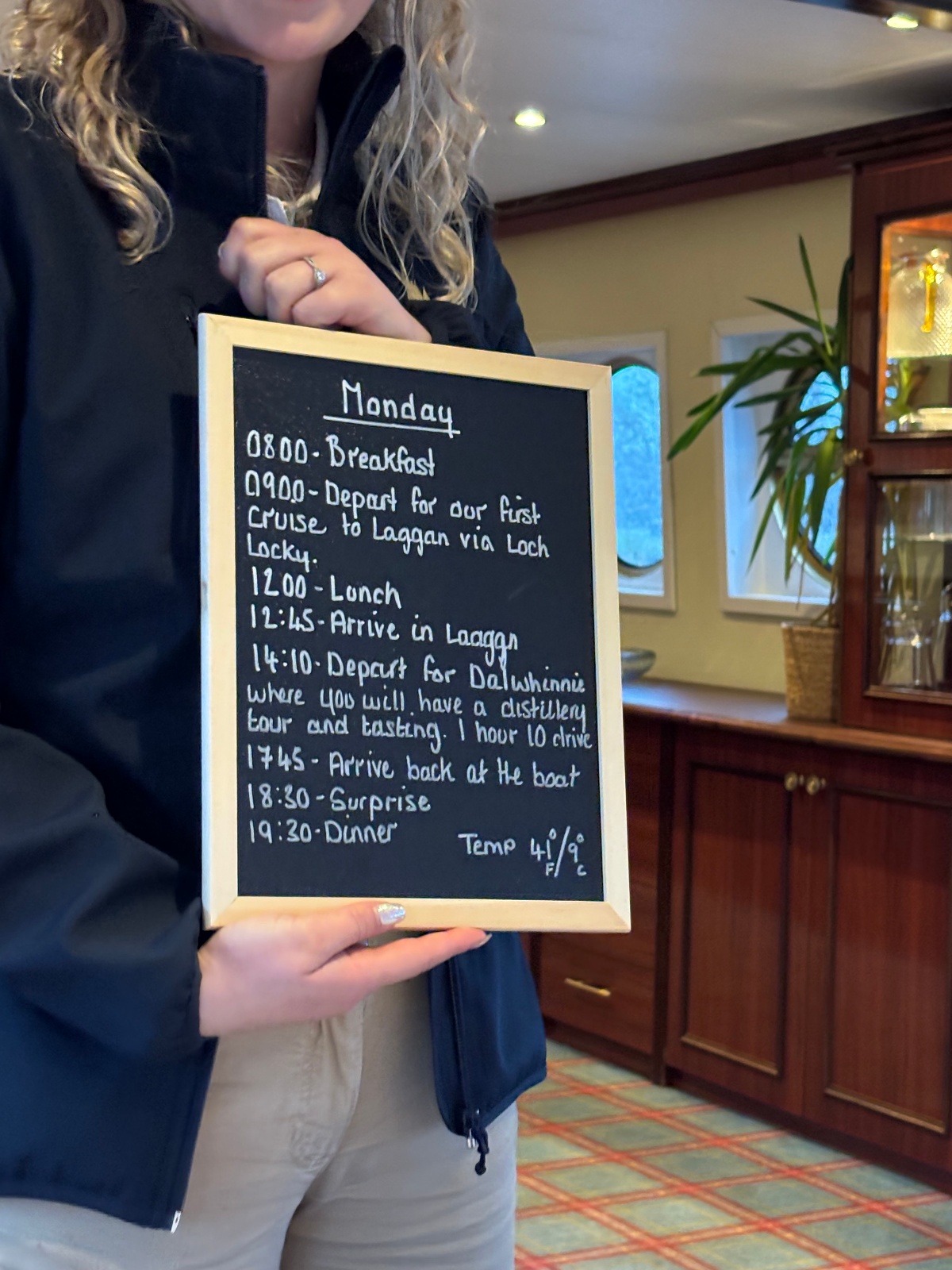
Though you’ll have a daily itinerary and abundant options for nearby excursions, nothing about the Spirit of Scotland schedule (or barge cruises in general) is set in stone. There are no itineraries printed months in advance or excursions to choose or purchase. In fact, the captain simply chats with you each evening before dinner to talk about the day ahead and the schedule is written on a chalkboard in the salon. What’s more, absolutely everything is included. And if changes need to be made for any reason, the crew works swiftly to address them and keep the guest experience moving along smoothly. Because the format is so handpicked, nearly everything can be adjusted, from accommodating dietary needs to special requests.
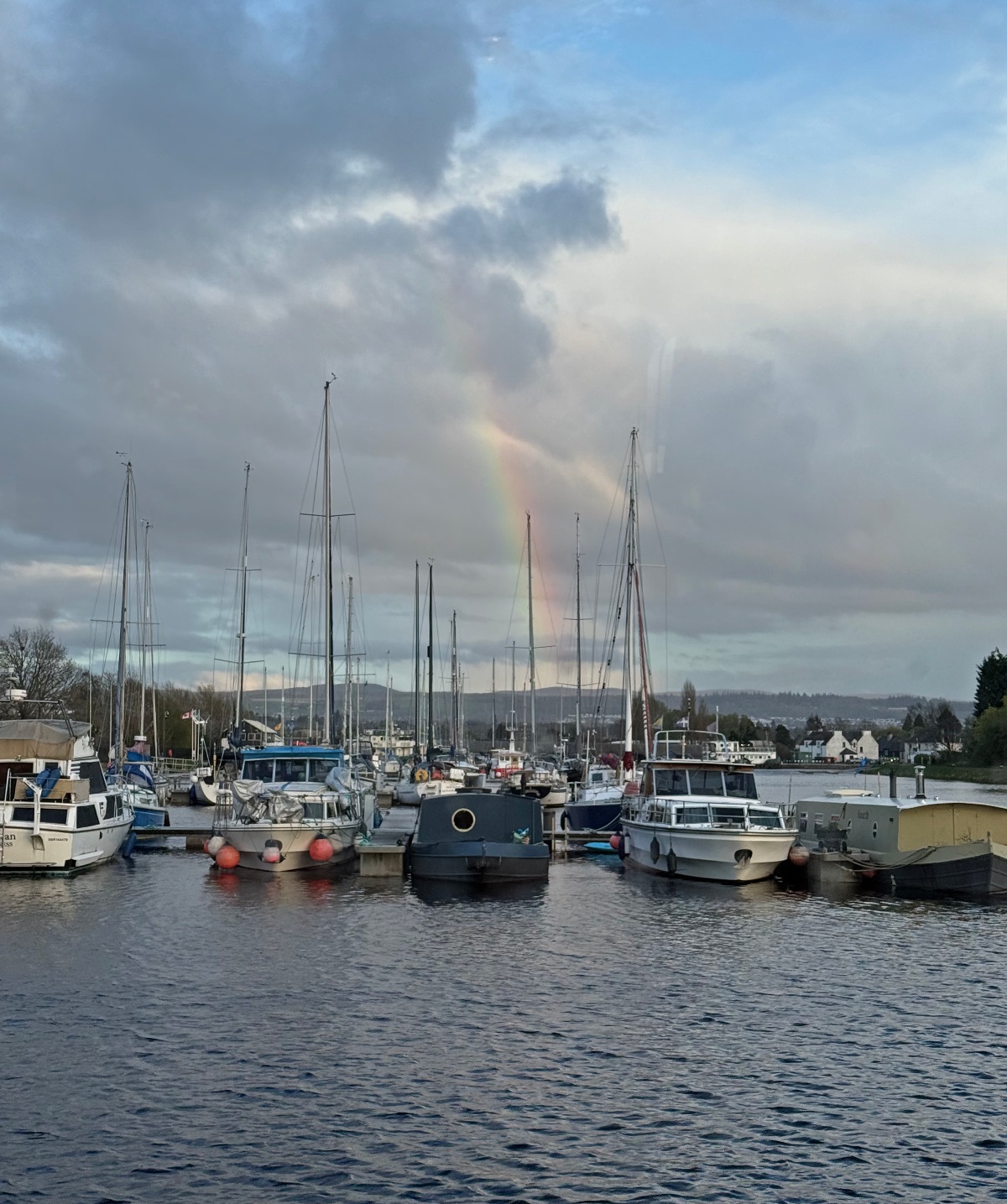
Around every bend in the canal (and in truth, by the changing moment), the clouds gather and shift and the sky looks utterly different. It happens so quickly it’s almost hard to appreciate with the naked eye. One of our crew remarked that you get all four seasons each day in the Highlands, and that felt accurate. We were largely treated to windy, sunny climes, but there were definitely passing rain showers and gusty breezes. We even had some rainbows.

Every journey should feel special. We’ll pair you with an expert Travel Advisor who can arrange insider perks while handling every detail behind the scenes — from pre-cruise accommodations and sightseeing to private shore excursions.
Part of the beauty of traveling by barge is that you are immersed in the area in an authentic way. Watching the sunrise come up over the lakes, or seeing the sun and trees change from the wooded fairytale feel of Loch Oich to the more expansive and open Loch Ness, is not something you could appreciate as easily by land.
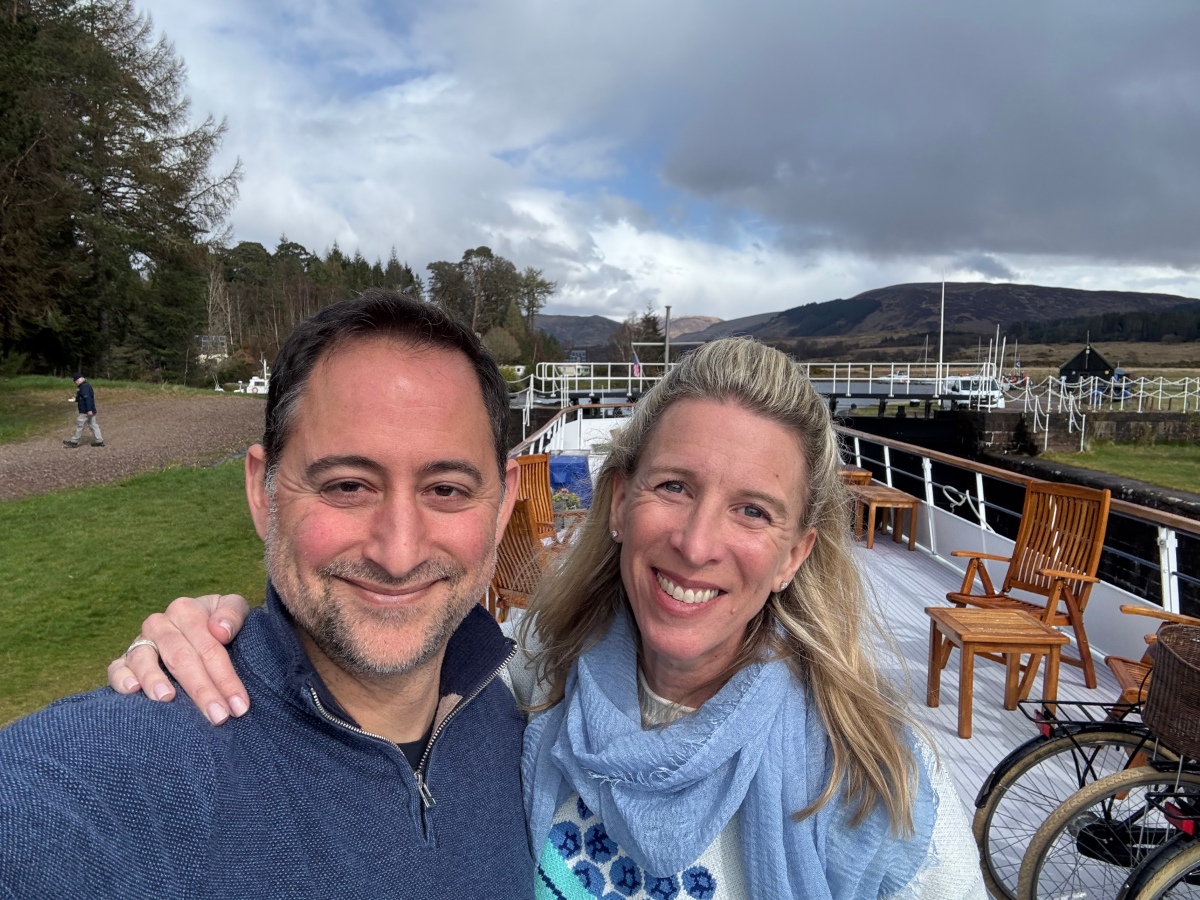
Traveling via canal is full of local color and flavor. Unlike cruising on a large, open body of water, the experience is serene and calm. Each approach to a lock or series of locks is a chance to watch a feat of engineering in action as the barge enters the chamber, the solid gates close and the water fills or drains to move up or down the “steps.” Although we passed through numerous swing bridges and locks (the largest single set we traveled was a set of five, and we caught a glimpse of the famous Neptune’s Staircase and its eight locks), each one felt new and compelled us to gather on the deck to take in the atmosphere. It was also somewhat of a fishbowl situation as nearby locals and travelers would watch us move through the locks from the nearby shore.
As we approached each lock, we could see the lock keeper awaiting our arrival and even peer into the keeper’s home adjacent to the water. The process was leisurely and felt like a step back in time with a chance to chat with them about the day at hand, conditions along the canal or just a smile and a bit of small talk.
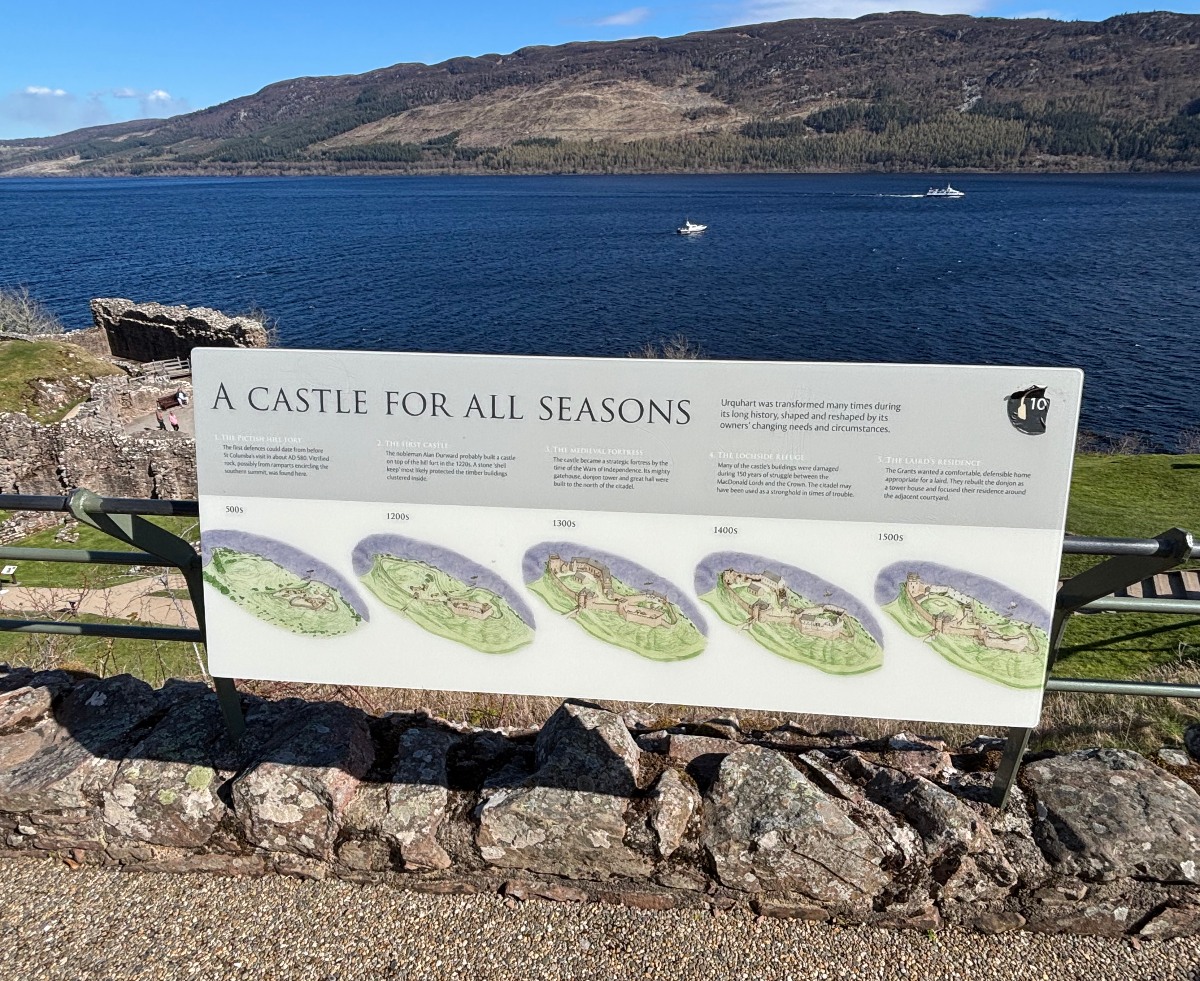
Visiting Urquhart Castle on the shores of Loch Ness was a treat. Its sprawling, well-preserved ruins are a fascinating walk through more than 1,000 years of history in the Highlands. Urquhart began its early days as a Pictish fort and then morphed over 500 years into a medieval fortress, during which time it mushroomed. After the Jacobite uprisings in the mid 1700s, the castle was used as a garrison and ultimately fell into ruin. Walking the grounds is literally a walk through the past as you can see in elaborate drawings how the footprint changed roughly every 100 years. Beyond getting to explore the castle on foot, its position on the edge of Loch Ness afforded us the added benefit of viewing it from the water the next day for a completely different perspective.
A journey on the Spirit of Scotland is not about a nonstop barrage of activities. Instead, its slower pace allows ample time to commune with the area and get immersed in the local culture. Part of the reason Scottish culture seems so infused with legend and strongly held passions is due to the political history that saw the Jacobite movement crushed at the Battle of Culloden on April 20, 1746. After the battle, it was made illegal to be “visibly Scottish” — no Highland dress (kilts), no possession of weapons and no bagpipes. The visit to Culloden battlefield (we happened to be there on the anniversary of the battle) was particularly meaningful and we learned a great deal about the dynamics between the English government and Scottish clans at the onsite museum.
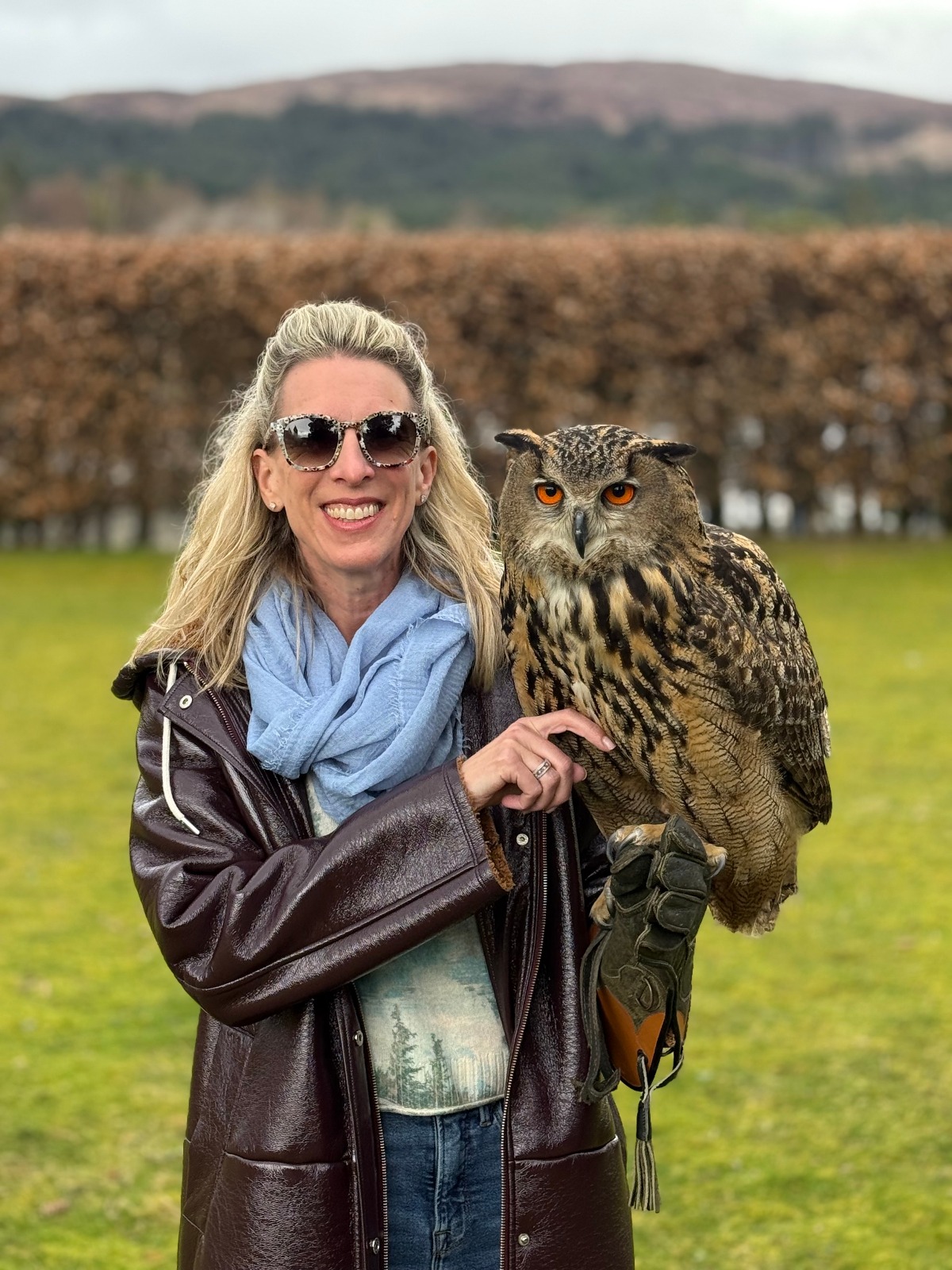
Back onboard the barge, local experts joined us to share their stories and crafts and told us about the various aspects of Scottish culture that were banned. We also walked to a nearby abbey one day for a phenomenal falconry display to hear about (and hold!) birds of prey indigenous to the Highlands.
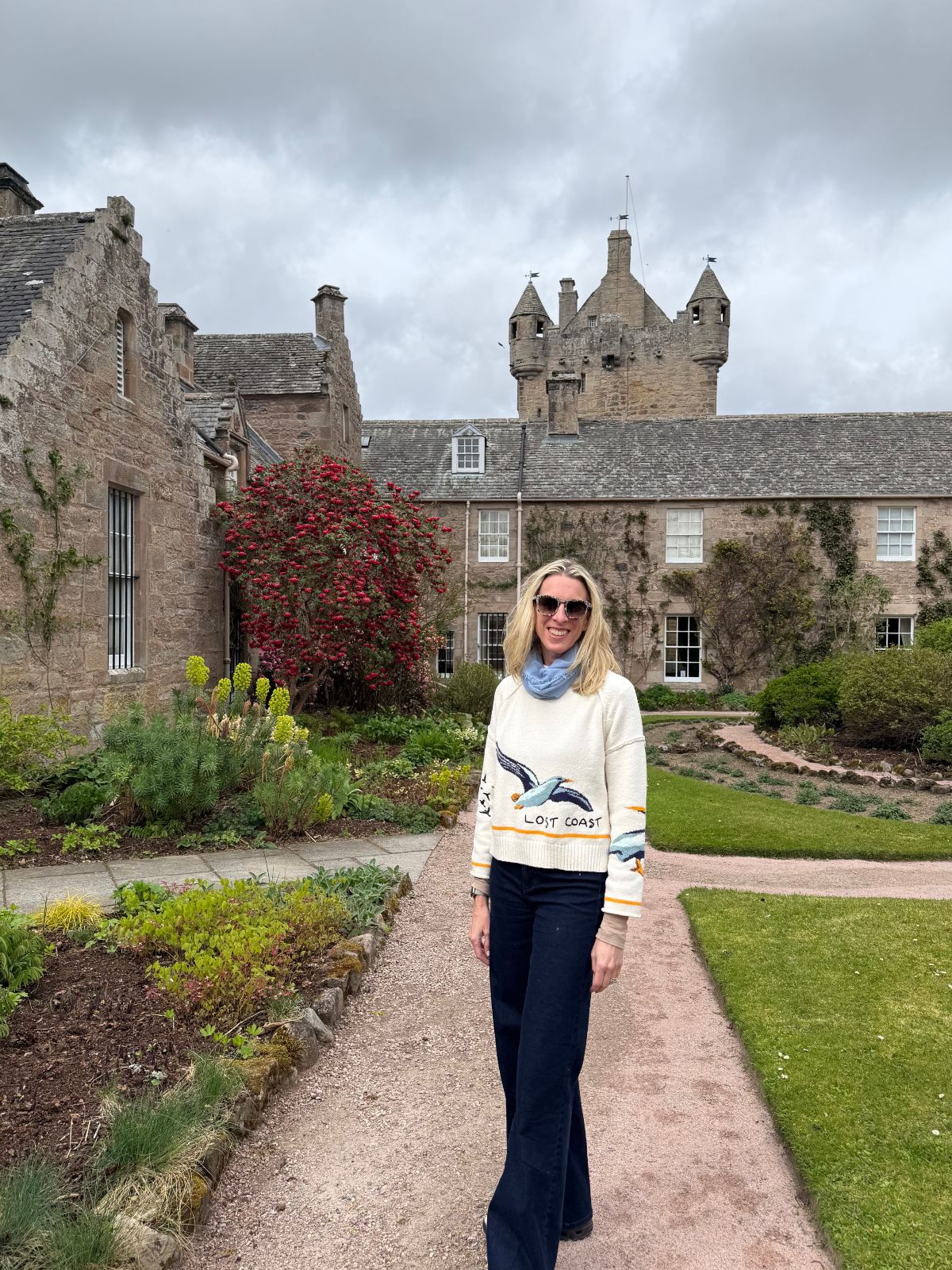
Cawdor Castle near Inverness, with its drawbridge and thick stone walls, was one of the most interesting castles we visited, particularly because it is still inhabited. It’s been in the same family for over 600 years and is famously associated with Shakespeare’s Scottish play, the one whose name shall not be mentioned (you know, M-beth) thanks to theatrical superstition. Learning about the history of the castle and walking the meticulously planted adjacent gardens was remarkable, but seeing it still living and breathing as a modern home, along with more contemporary artwork and bits of pieces of 21st century life, was intoxicating.
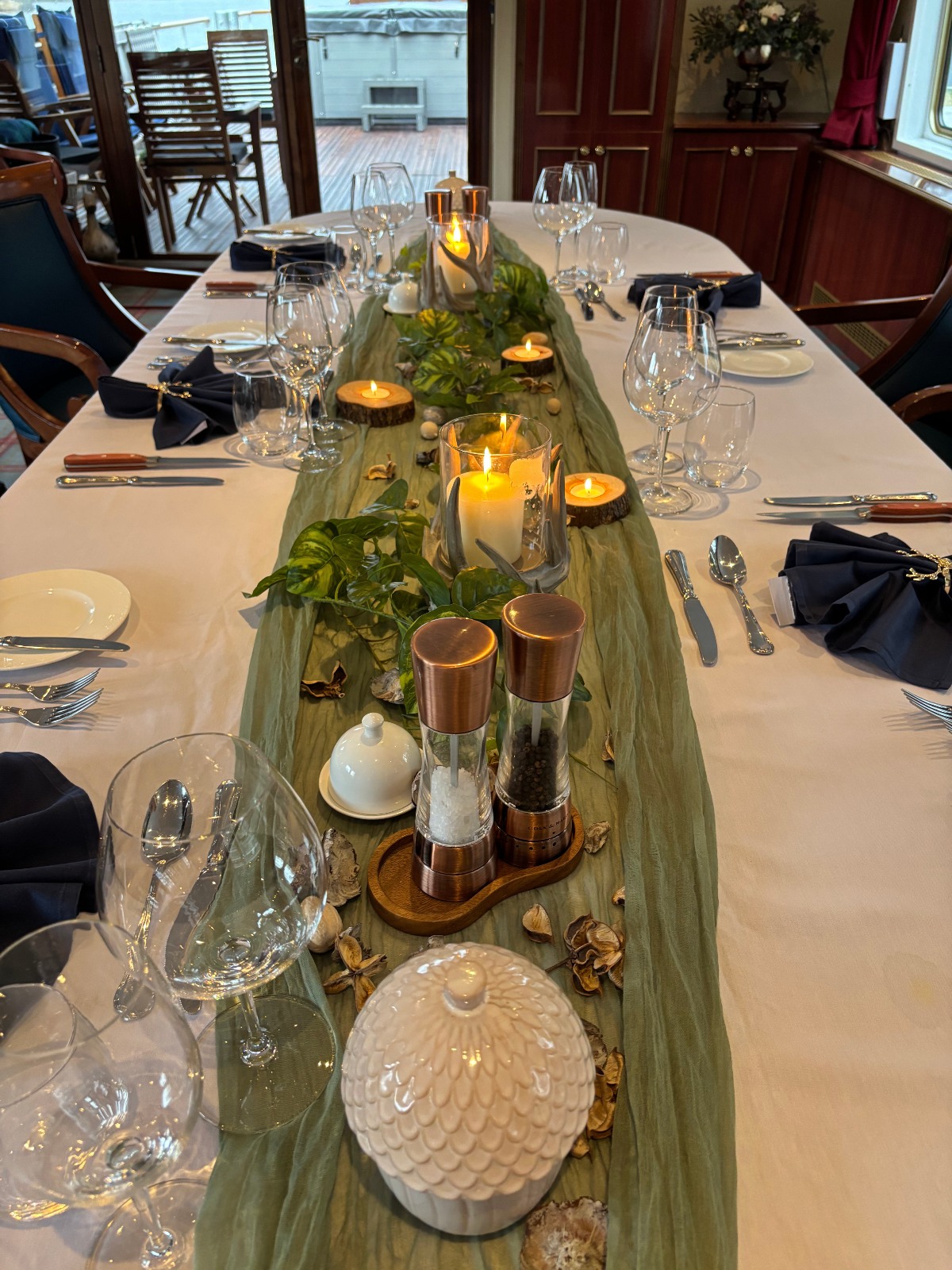
You certainly won’t want for sustenance on a barge tour of the Caledonian Canal. From cooked breakfasts like Eggs Royale (poached eggs over local Scottish salmon on toast kissed with hollandaise) and Scottish porridge (with a whiskey topper if you so choose) to get your day going, to a mid-cruise or post-excursion lunch of fresh Scottish lobster-topped macaroni and cheese, the onboard chef will keep your mouth watering. Both lunch and dinner are accompanied by wines sourced from other European barge-cruising regions, and a daily return to the boat brings a signature cocktail along with the ever-present fully stocked bar. Dinners each night felt special yet convivial and relaxed, whether the menu featured Scottish lamb and hasselback potatoes or succulent scallops. The bounty of the surrounding waters and the Highlands was on full display and we were its happy recipients.
In addition to dessert, there was also always a postprandial array of gorgeous regional cheeses. And lest we forget, as it is central to some people’s enjoyment of the region, the whiskey. We visited Dalwhinnie, noted as being the distillery in the Highlands with the highest elevation, to learn about the whiskey-making process, see their copper stills in action and, of course, taste their wares. The onboard bar also had a well-curated selection of local whiskeys to try at your leisure. A wee dram whenever the mood strikes seems to be the prevailing thought on a Scottish Highlands holiday.

A barge cruise along the Caledonian Canal is ideal for empty nesters or groups of friends. It would also make for an unforgettable family vacation for those with older children and teens, or a multigenerational stunner if booked as a family charter. This option allows for further tailoring excursions to meet individual group desires, whether golfing on storied Scottish courses, focusing more on whiskey, or even visiting sites that may align with one’s heritage travel interests.
Amy was hosted on the Spirit of Scotland by Barge Lady Cruises. As always, our opinions on Ciao Bambino are our own. Photos by Amy Andrews.
Editor’s note: This post was accurate when published. We advise checking independently for the latest information and updates. Ciao Bambino does not accept responsibility or liability for any errors or omissions in, or for any actions taken based on, the information presented.


 travel recommendations, inspiring adventures, and exclusive travel offers
"*" indicates required fields
Want to save all the great intel and tips you are finding on Ciao Bambino? My Trip Planner allows you to bookmark articles, family-friendly hotel reviews, and family vacation packages. Simply click the heart icon on anything you want to save. Site registration is required to get started. Happy planning!
Please fillout the form below to create your free My Trip Planner account.