 Back
Back







 FACEBOOK
 Pinterest
 Instagram

 FACEBOOK
Pinterest
Instagram
FACEBOOK
Pinterest
Instagram
One of Barcelona’s greatest pleasures is that you can spend the morning exploring Gaudí, wandering the Gothic Quarter or visiting a museum, and then be on the sand by lunchtime. Barcelona’s Mediterranean beachfront stretches for roughly three miles. These are urban beaches: lively, easy to reach and very convenient for families when you choose the right section and time of day.
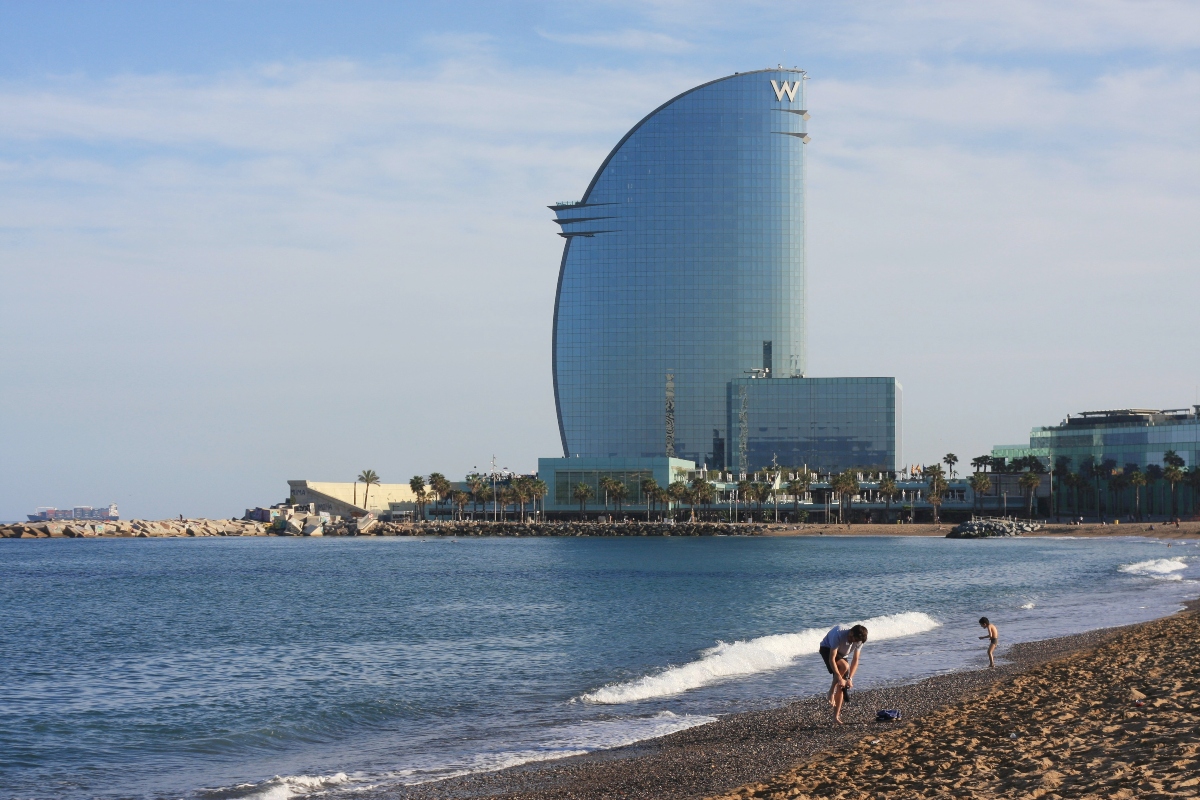
If you are looking at the sea, the beaches run from right to left, or southwest to northeast. Starting near the W Barcelona hotel (a local landmark shaped like a giant ship’s sail) and moving north toward the Fòrum, here is how I would think about them for families.
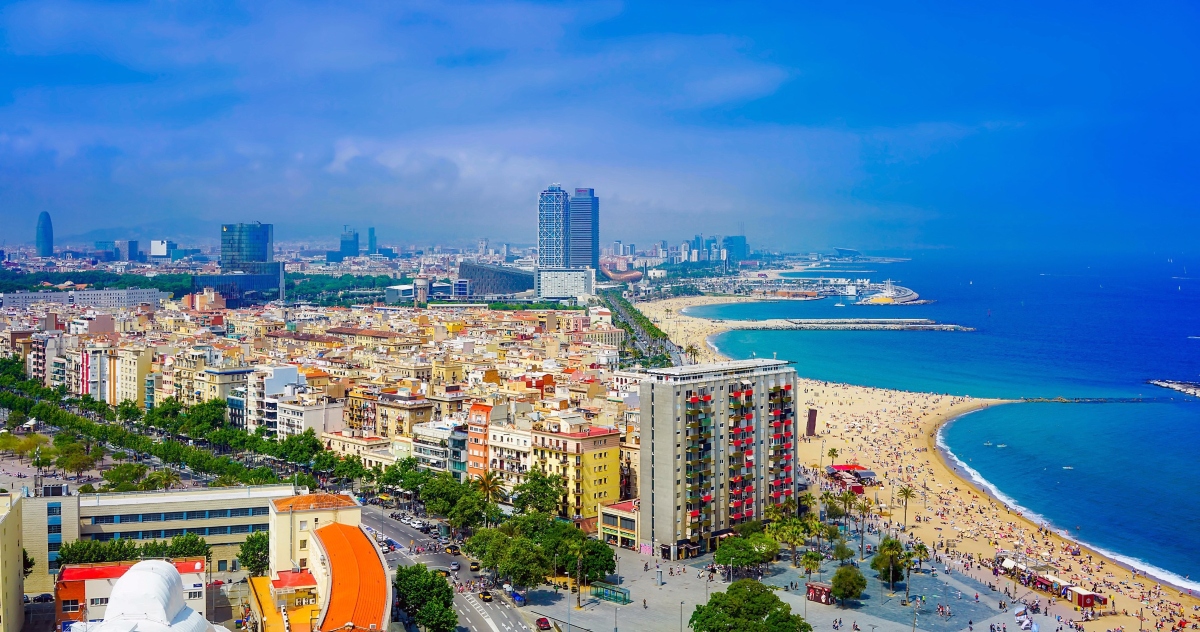
Before you decide on a beach, it helps to know that all of them are very well serviced. During the bathing season, you will find lifeguards, public toilets, showers, beach cafés, sunbed and umbrella rentals, and accessible beach areas along the waterfront. You may also use the restrooms at the beach cafés along the sand; you do not need to buy anything in order to use them.
The beach closest to the W Barcelona is Sant Sebastià, one of the city’s most historic beach areas. This is a good option if you want to combine a beach morning or beach afternoon with lunch or dinner nearby. The area around the W and the green glass Desigual building has several good restaurants, making it easy to spend a few hours by the sea without committing to a full day.
This stretch works well with children because the beach is wide and, in calm conditions, the entrance into the water can feel gradual. As always, check the beach flags and speak with a lifeguard before swimming, as sea conditions can change. There are also paddleboard rentals in this general area, making it fun for families with older kids or teenagers who want something more active than just sitting on the sand.
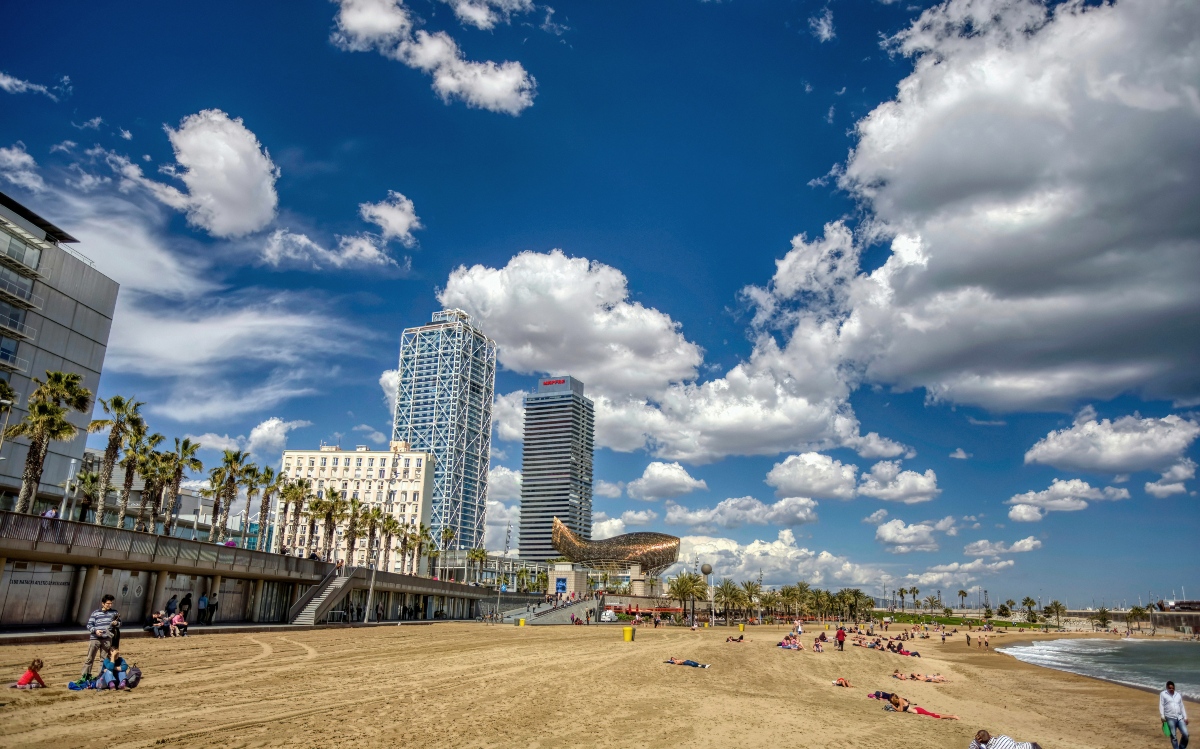
Moving north from Sant Sebastià, you reach the central Barceloneta beach area and then Somorrostro, leading toward Port Olímpic and the two tall seafront towers. This is the best-known beach area in Barcelona, and also the busiest. It has a fun, energetic atmosphere, but it is not usually my first choice for families with little kids. The vibe can skew younger and more social, especially later in the day, and in summer it can feel extremely crowded.
That said, families absolutely do use this beach. If you want to experience classic Barcelona beach life, go early in the day and consider leaving before the hottest and busiest hours.
North of Port Olímpic, Nova Icària is one of my favorite Barcelona beaches for families, especially those with young kids. It tends to feel calmer and more manageable than Barceloneta while still being central and easy to reach, and works well for a relaxed half-day. The beach is wide, sandy and has a gentle, family-friendly feel. For parents traveling with strollers or anyone with reduced mobility, it offers accessible wooden walkways plus adapted beach services during the swimming season (scroll down for more details).

Just send a quick request, and we’ll pair you with an expert Travel Advisor who can design and book your dream vacation to Spain: a custom itinerary, private guides, immersive local experiences and handpicked hotels.
Bogatell is another excellent option for children of all ages. One of Barcelona’s larger beaches, it has a slightly more local, active feel than Barceloneta. You’ll see swimmers, volleyball games, people using the seafront bike path, and families settling in for a longer beach day.
For families who want a bit more space, Bogatell can work better than the very central Barceloneta stretch. It also has beach cafés, sunbed and parasol rentals during the bathing season, public toilets, lifeguards, showers and accessible facilities.
Mar Bella has a more relaxed, open and sporty feel. It’s great for teenagers, especially if they are into skating, skateboarding or beach sports. The Mar Bella skate park is close to the beach, so you can combine time by the water with skating and then have lunch or dinner nearby.
One thing to note: Mar Bella is also known for its inclusive atmosphere and has a naturist/LGBTQ+ beach culture. That’s perfectly fine for many families, but it is useful to know in advance so you can choose the beach area that best fits your comfort level.
Barcelona’s beaches do not have much natural shade, so it is worth planning ahead. During the bathing season, many beaches have sunbed and umbrella rentals, usually connected to beach cafés or official beach concessions. For families, I think it is absolutely worth paying for these if you plan to stay more than an hour or two. Prices vary by location and season, but two loungers and an umbrella are likely to start around 30 euros for the day.
It’s generally first come, first served, so do not assume you can reserve in advance. If shade is important, especially from June through September, go earlier in the day or keep your beach visit short.
Barcelona has made real improvements in beach accessibility. Several beaches have wooden walkways that extend close to the shoreline, making them much easier for strollers, wheelchairs, and travelers with limited mobility. During the main swimming season, selected beaches also offer assisted bathing services. These may include adapted changing rooms, shaded areas, accessible showers, amphibious chairs, flotation support and trained staff who can help a person with reduced mobility enter and exit the water.
Nova Icària and Bogatell are especially strong on accessibility. Services are seasonal and may require advance reservation, so check current details before going.
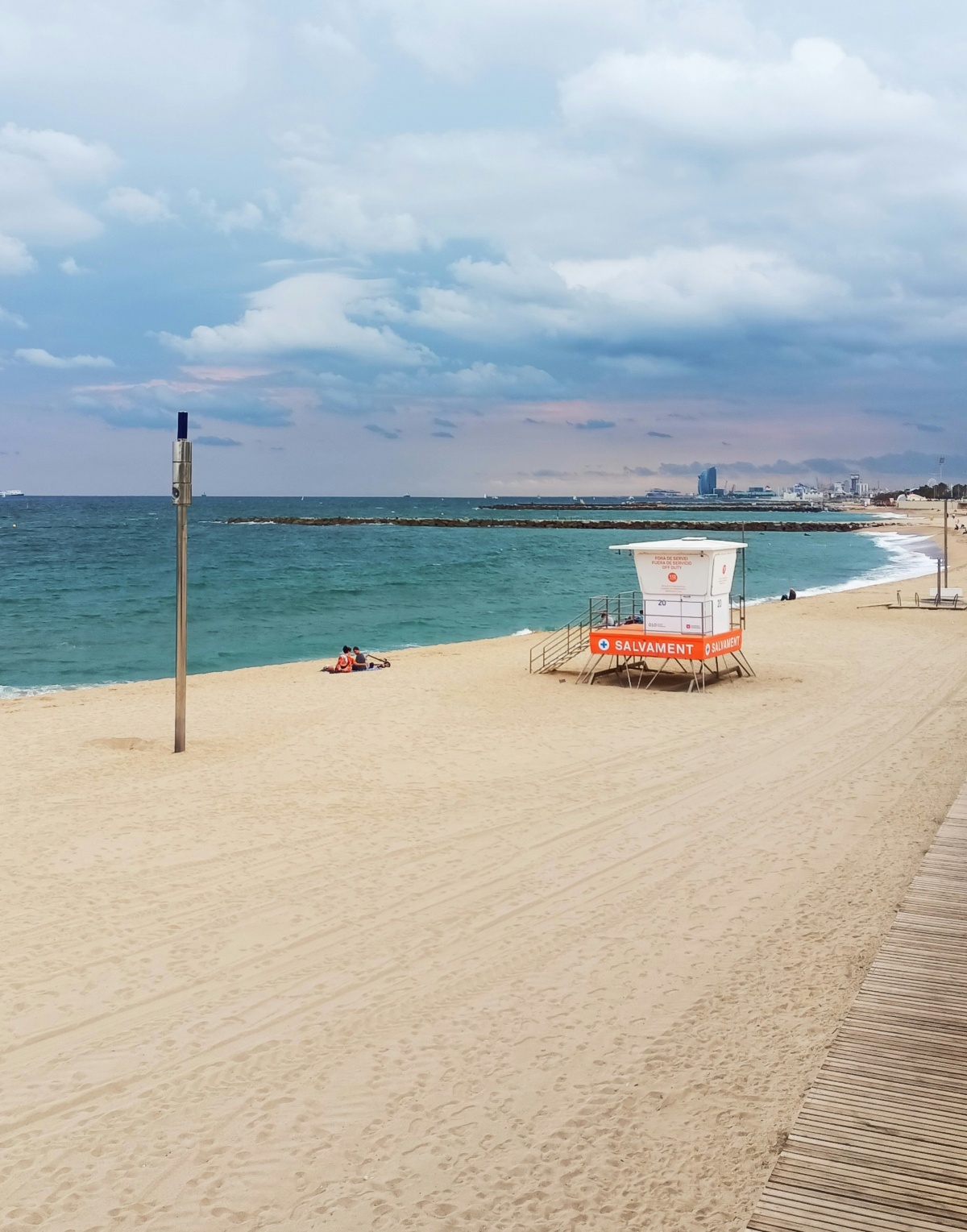
Barcelona’s beaches have lifeguards during the swimming season, generally from late morning through early evening. Always check the current posted schedule, especially outside peak summer. Swimming areas are marked with yellow buoys to keep motorized boats and jet skis away. Always stay alert, of course, and pay attention to the lifeguards and beach flags:
Green means swimming conditions are good.
Yellow means caution. This could be because of currents, waves, jellyfish, water quality or another issue. If you see a yellow flag, ask the lifeguard why before going in.
Red means do not swim.
Jellyfish warnings may also be posted separately. The jellyfish symbol can be easy to miss, so when in doubt, ask a lifeguard before letting children enter the water.
One very important reminder: Keep a close eye on your belongings. Barcelona’s beaches are in the city, and petty theft can happen. I usually advise clients to leave passports in the hotel safe and keep a photo of passports on their phones instead. Bring only what you need to the beach and make sure someone is always watching your things.
Relevant Links:
Browse all accommodations and activities in Barcelona on Ciao Bambino
52 essential tips for a family vacation in Spain
How to have a toddler-friendly Barcelona vacation
72 hours in Barcelona with teens
A great Barcelona Gothic Quarter walking tour (with chocolate)
How to choose the right Spain beach vacation with kids
Essential tips for exploring Spain’s Costa Brava with kids
Editor’s note: This post was accurate when published. We advise checking independently for the latest information and updates. Ciao Bambino does not accept responsibility or liability for any errors or omissions in, or for any actions taken based on, the information presented.

Written By
By Nancy Daum Dailey


 travel recommendations, inspiring adventures, and exclusive travel offers
"*" indicates required fields
Want to save all the great intel and tips you are finding on Ciao Bambino? My Trip Planner allows you to bookmark articles, family-friendly hotel reviews, and family vacation packages. Simply click the heart icon on anything you want to save. Site registration is required to get started. Happy planning!
Please fillout the form below to create your free My Trip Planner account.
Start a Discussion
1 Comments