 Back
Back







 FACEBOOK
 Pinterest
 Instagram

 FACEBOOK
Pinterest
Instagram
FACEBOOK
Pinterest
Instagram
Paris has some of the world’s greatest museums. Your kids may not care. C’est la vie sometimes when it comes to trying to sneak some culture into family vacations.
Fortunately, Paris museums are as diverse and engaging as the city itself. But it’s important to pick the right museums and approach the really big ones strategically. Wouldn’t children be more excited if you told them you were going to hunt for mummies, stand beneath airplanes in an old church, disappear into Monet’s Water Lilies, play vintage carnival games and make some tuneful noise? Several of my favorite Paris museums have the added bonus of gardens, parks and other outdoor spaces where kids can run around and blow off some steam.
Next time you’re in Paris, here’s a comprehensive list of museums that will please kids and adults alike. You’ll know the big names, but check out the other cultural gems sure to be a pleasant Parisian surprise.
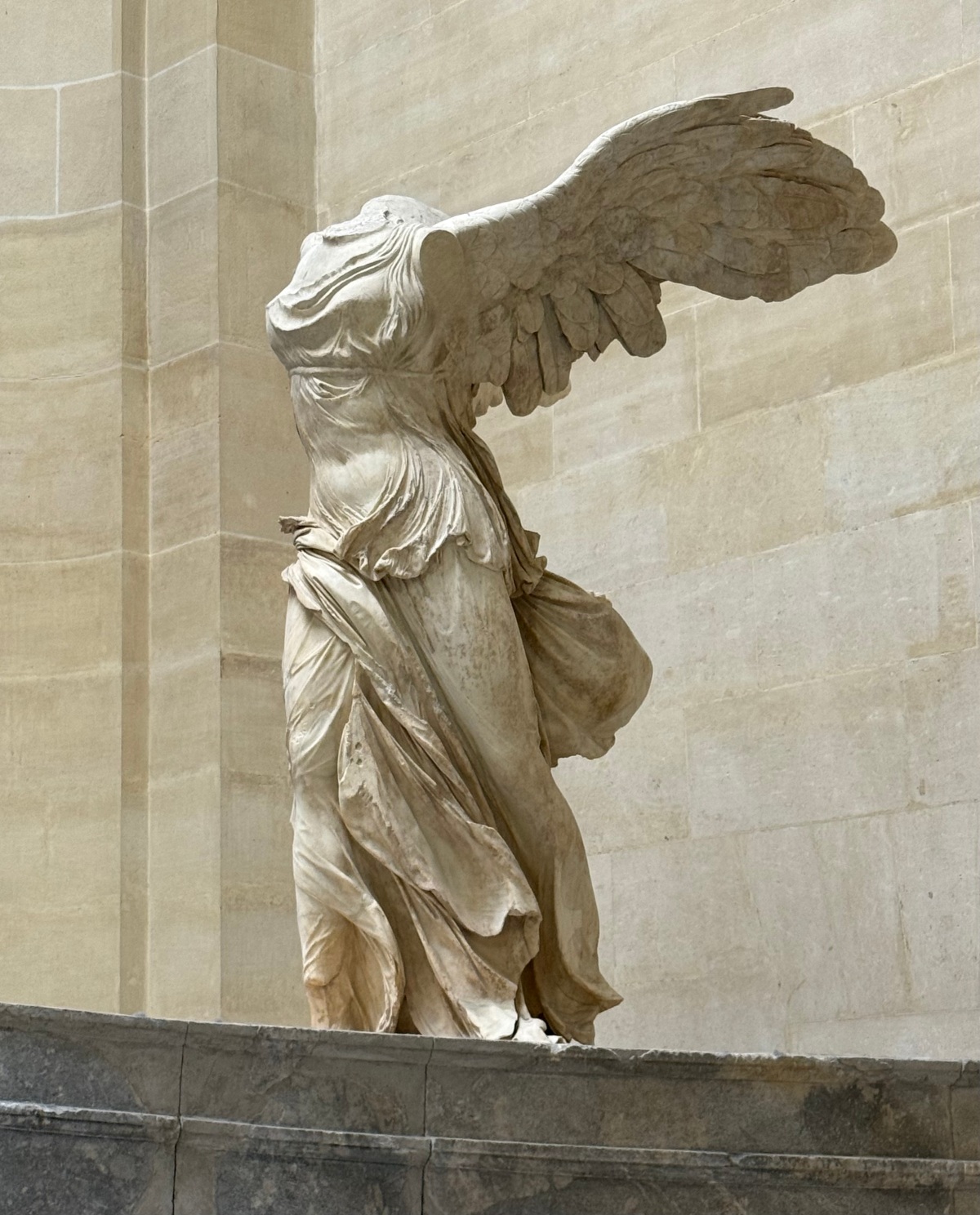
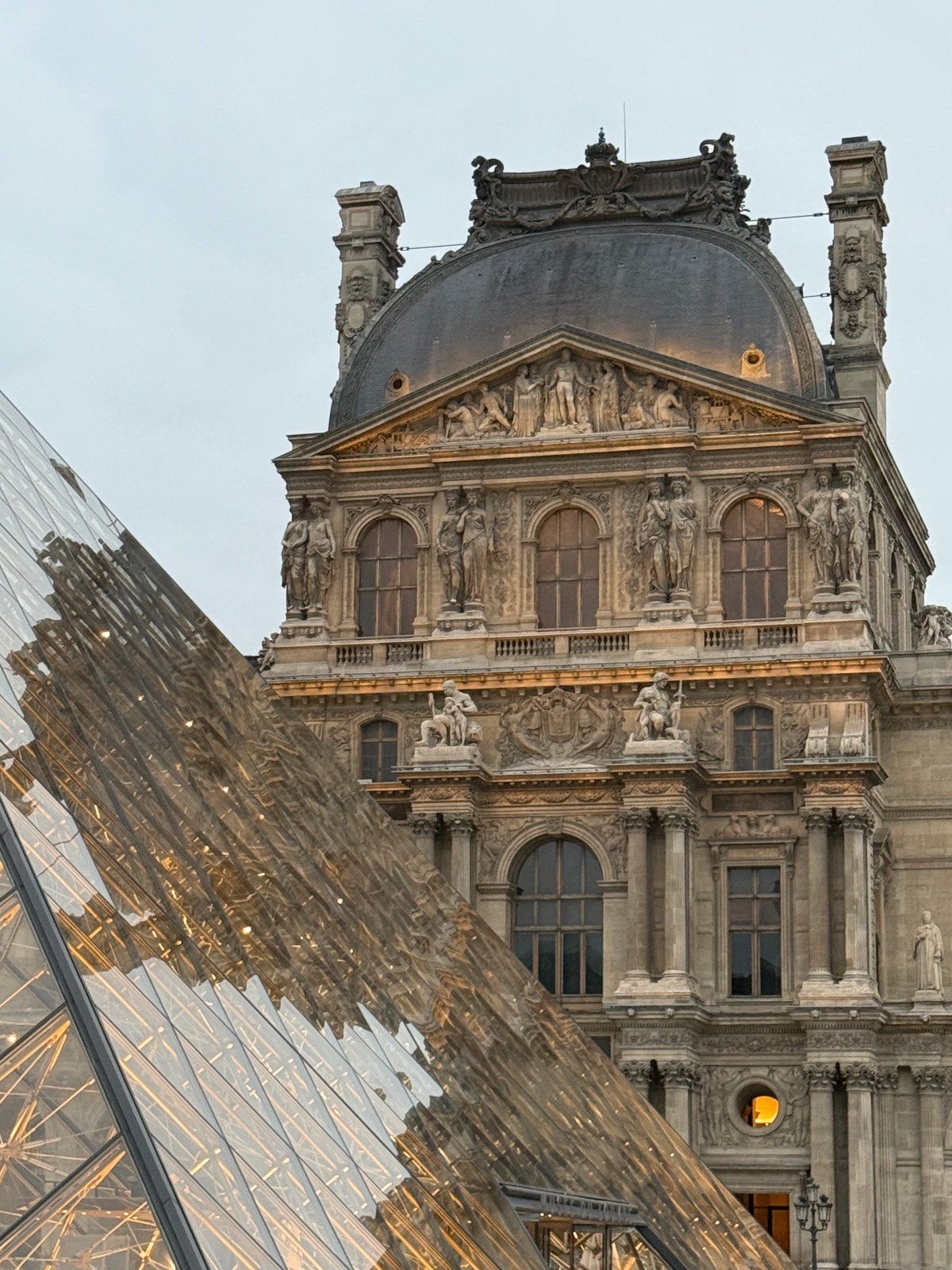
You don’t need to skip the Louvre because you’re traveling with kids. You just need to resist trying to see all of the Louvre. At more than 750,000 square feet, to call it big is an understatement.
Instead of attempting to conquer it, turn your visit into a scavenger hunt. Find the Mona Lisa, Winged Victory of Samothrace and Venus de Milo, or choose one section that matches your child’s interests. Egyptian antiquities are an easy sell for kids fascinated by mummies and ancient civilizations. Beneath the museum, you can also see remnants of the medieval fortress that stood here before the Louvre became a royal palace.
Given that 9 million people visited the Louvre in 2025, you might also consider a private or after-hours tour. A family-focused tour with a private guide will zero you in on the Louvre’s greatest hits, fill you in on some history and keep you from wading aimlessly in the crowds. Families should also know about the Studio, the Louvre’s education space. It has books, games and activities designed to help children explore the collections in a more hands-on way. The museum also schedules family workshops, storytelling sessions and other children’s activities throughout the year.
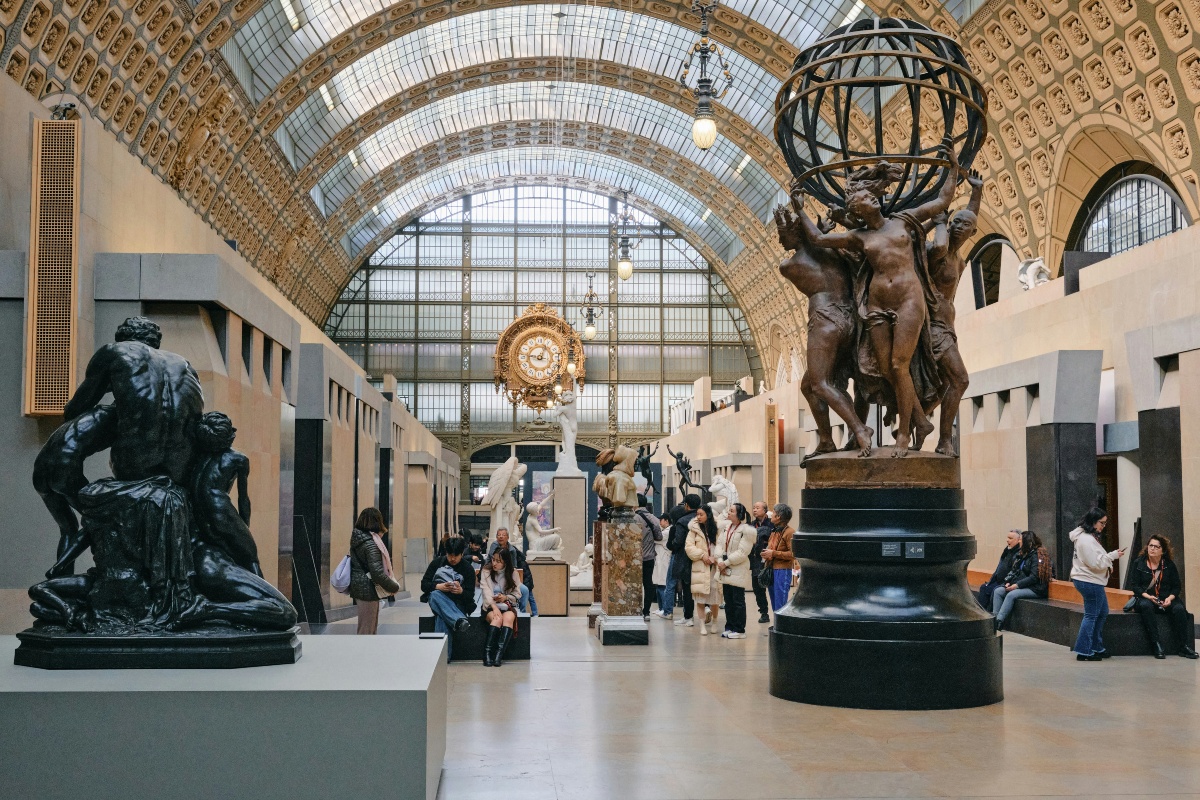
The Musée d’Orsay in the 7th arrondissement is spectacular, occupying a former railway station built for the 1900 World’s Fair, and the airy central hall immediately gives kids something to look at besides another gold frame.
Then there’s the art. Van Gogh. Monet. Renoir. Degas and his dancers. The recognizable subjects, vivid colors and relatively manageable size make this one of the easiest major Paris art museums to visit as a family. And yes, you should absolutely go up to that famous giant clock. The view through it toward Paris is almost as memorable as what’s hanging on the walls, and the family photos will be framers for your own wall of fame.
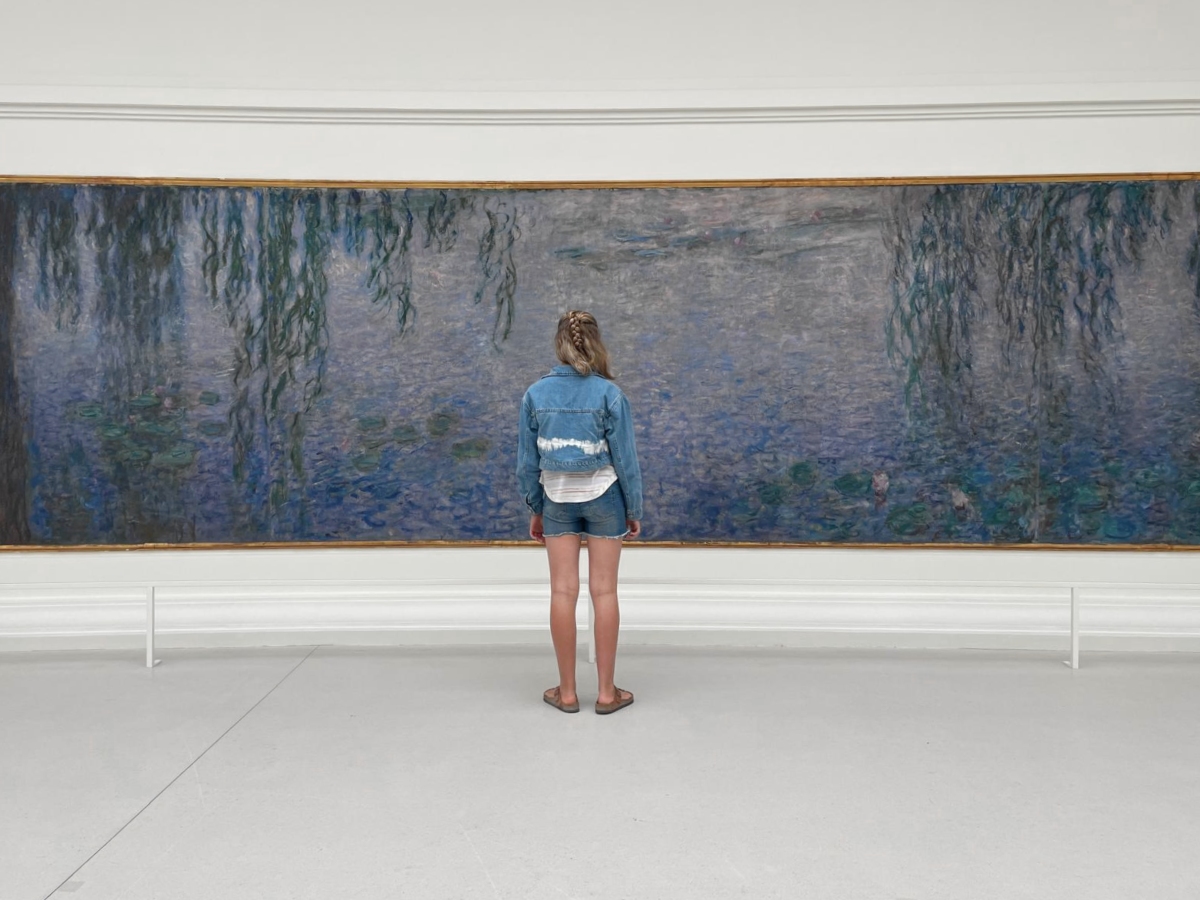
For younger kids, the Musée de l’Orangerie (1st arrondissement) might be the perfect first Paris art museum. The stars are Monet’s monumental Water Lilies, which stretch across the curved walls of two oval galleries. Instead of peering at a little canvas on a wall, children are practically surrounded by the paintings, making them feel immersed. The museum also has a Monet-inspired family space where kids can draw, listen to stories, explore hands-on sensory activities, and even create their own paper water lilies.
Since the Orangerie sits inside the Tuileries Garden, kids have plenty of space to move and play after their Monet encounter. Art followed by fresh air is a pretty good Paris parenting strategy.
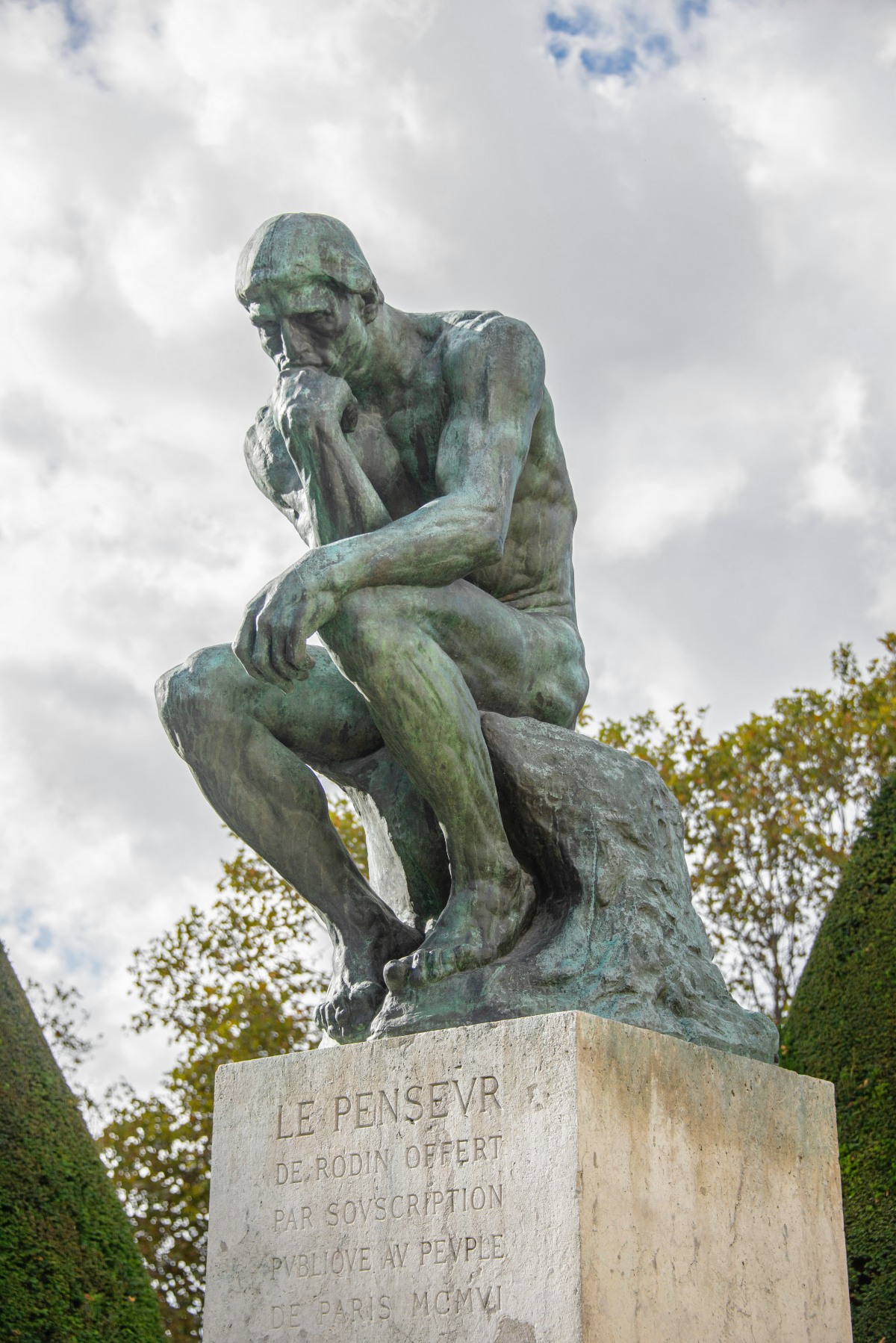
Set in the elegant Hôtel Biron in Paris’s 7th arrondissement, the Musée Rodin showcases many of Auguste Rodin’s most famous works. But for families, the glorious sculpture garden is what makes this space especially appealing.
Kids can get outside and wander the paths among trees, lawns and monumental sculptures, including The Thinker and The Gates of Hell. Sculpture can also feel more approachable to children when they can walk around it, experience the larger-than-life works from different angles, and see them in the landscape rather than moving from piece to piece inside a closed-up gallery. It’s art with a little breathing room for younger ones.
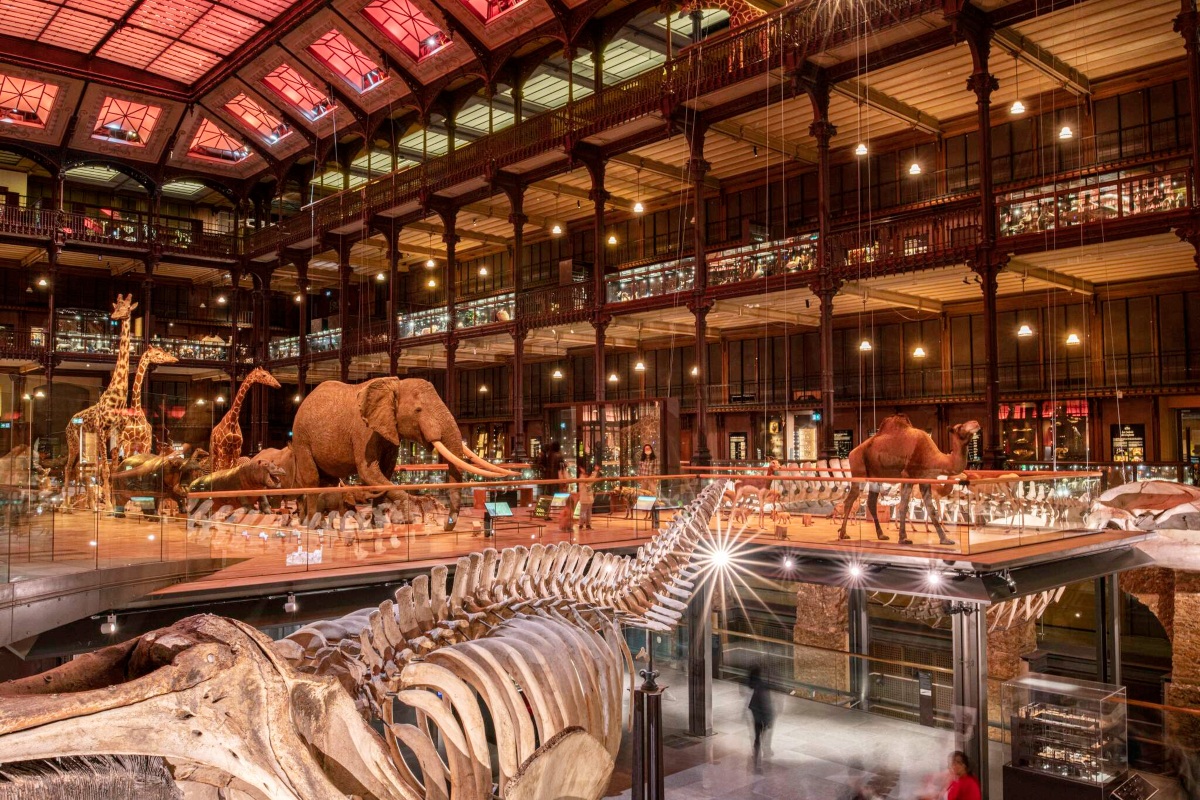
Sometimes Monet won’t cut it. Elephants will. Set in the Jardin des Plantes in the 5th arrondissement, the Grande Galerie de l’Évolution, part of Paris’s Muséum National d’Histoire Naturelle, has one of the most dramatic interiors of any family museum in the city — a procession of elephants, giraffes, rhinos and other animals appears to march through the soaring central hall beneath a glass roof.
The larger museum complex offers plenty more for kids interested in dinosaurs, geology, anatomy and the natural world. Outside, the 60-acre Jardin des Plantes is a destination in its own right, with 11 different gardens, tropical greenhouses, a labyrinth, historic trees and even a small zoo.
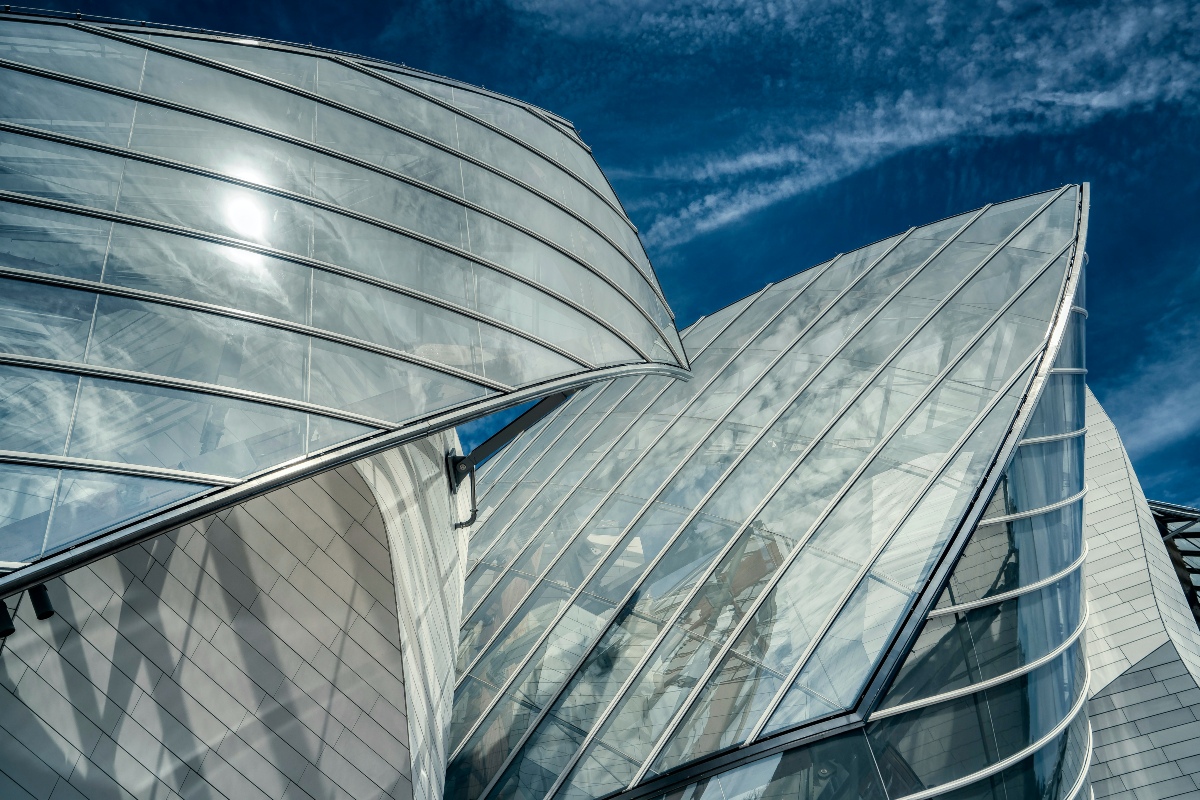
You don’t have to understand contemporary art to appreciate the Fondation Louis Vuitton or admire Frank Gehry’s extraordinary building. Its 12 enormous curved glass sails seem to float above the landscape, making the building itself almost as much fun to see as the art inside. Set on the edge of the Bois de Boulogne in Paris’s 16th arrondissement, the Fondation hosts major exhibitions and offers family tours and workshops that make contemporary art more accessible to younger visitors.
Bonus: Right next door is the Jardin d’Acclimatation, with acres of outdoor space plus play areas, attractions and rides. That makes it possible to pair a serious dose of contemporary culture with something considerably less serious afterward. Everybody wins.
TIP: Temporarily closed since August, the Fondation is scheduled to reopen October 9, 2026, with a new slate of exhibitions.
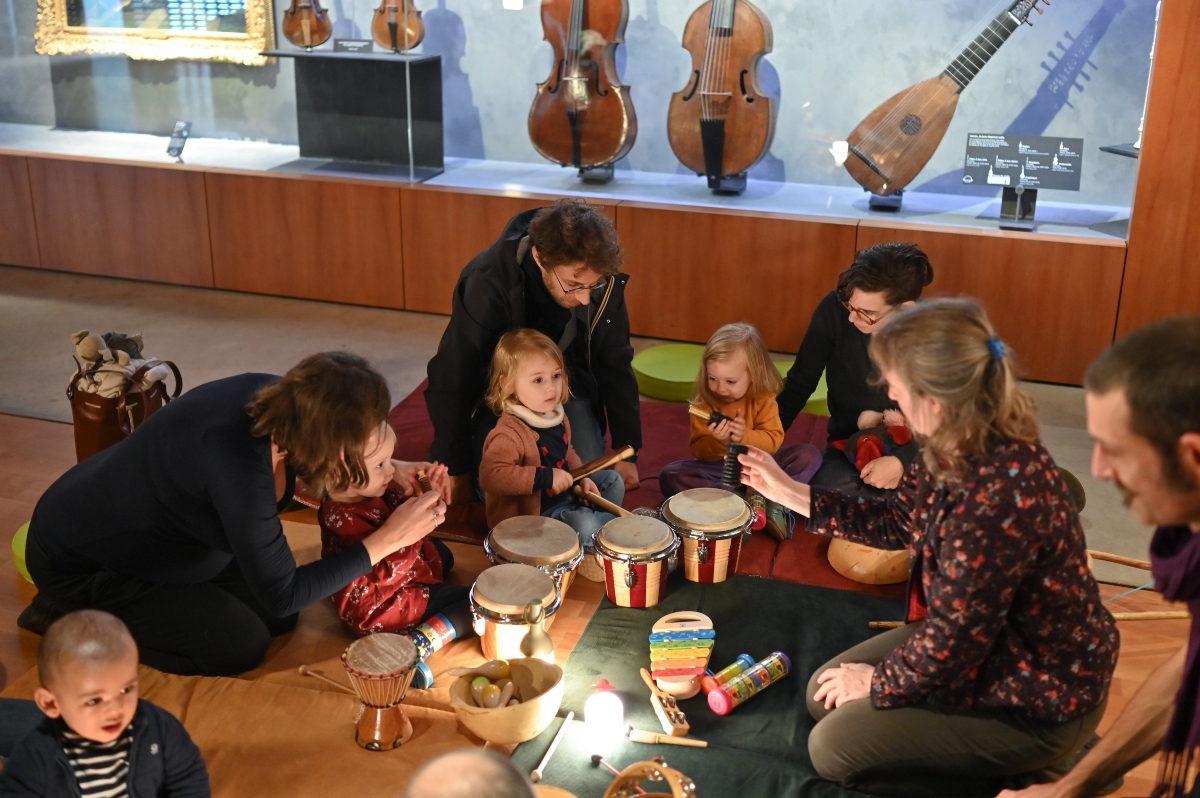
Finally, a cultural institution where kids don’t have to be quiet. The Philharmonie de Paris isn’t just for concerts — its Musée de la Musique displays nearly 1,000 instruments from around the world, with audio and interactive elements that let kids discover how music and instruments have evolved over the centuries. Workshops and activities encourage children and families to sing, play, listen and experiment with music.
Make time to explore the surrounding Parc de la Villette (a.k.a. La Villette) while you’re here. One of Paris’s largest parks, this 135-acre playground in the 19th arrondissement has sprawling lawns, themed gardens, playgrounds, canals and quirky red architectural structures known as folies. It’s also home to the Cité des Sciences et de l’Industrie, with hands-on children’s exhibits, making a solid case for spending an entire day here.
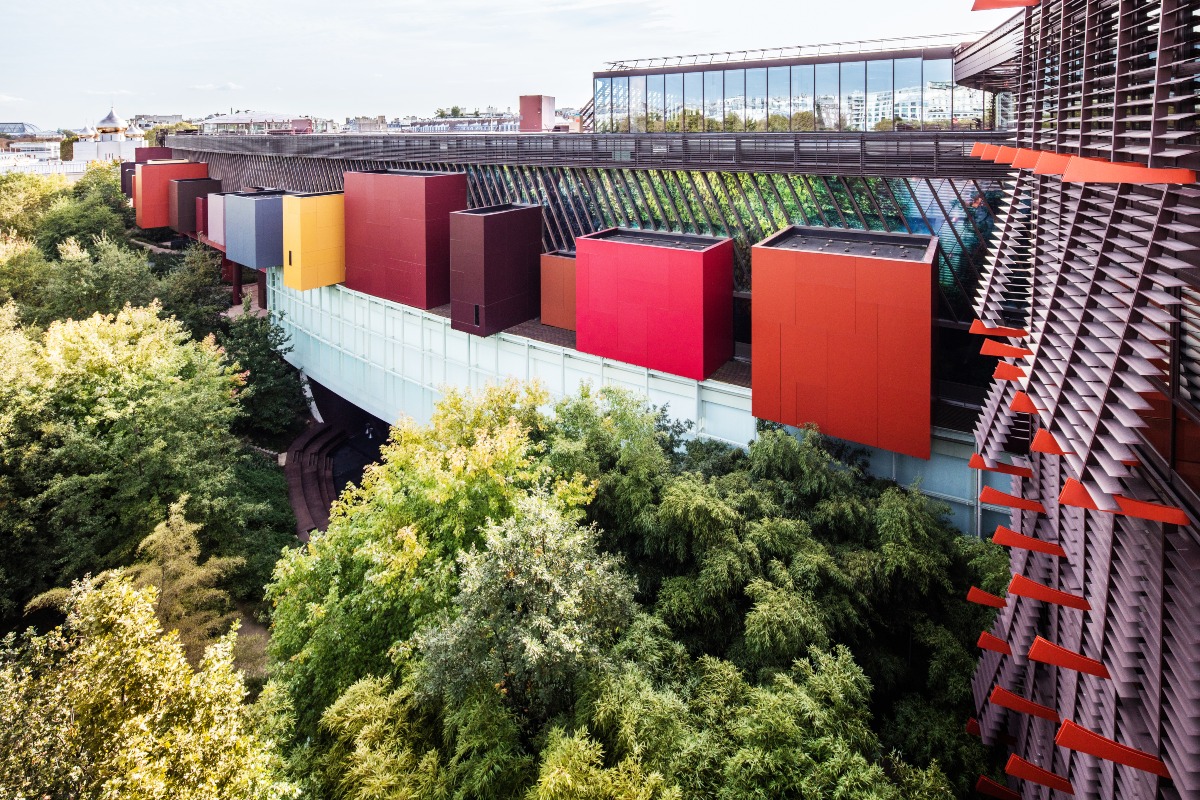
Near the Eiffel Tower, the Musée du Quai Branly–Jacques Chirac (7th arrondissement) introduces families to arts and cultures from Africa, Asia, Oceania and the Americas. It’s a counterpoint to Paris’s European art museums, particularly for older children interested in cultures, masks, textiles, sculpture and objects from around the world. The surrounding garden, designed by landscape architect Gilles Clément, offers winding paths, ponds and greenery for a peaceful break before or after exploring the galleries.
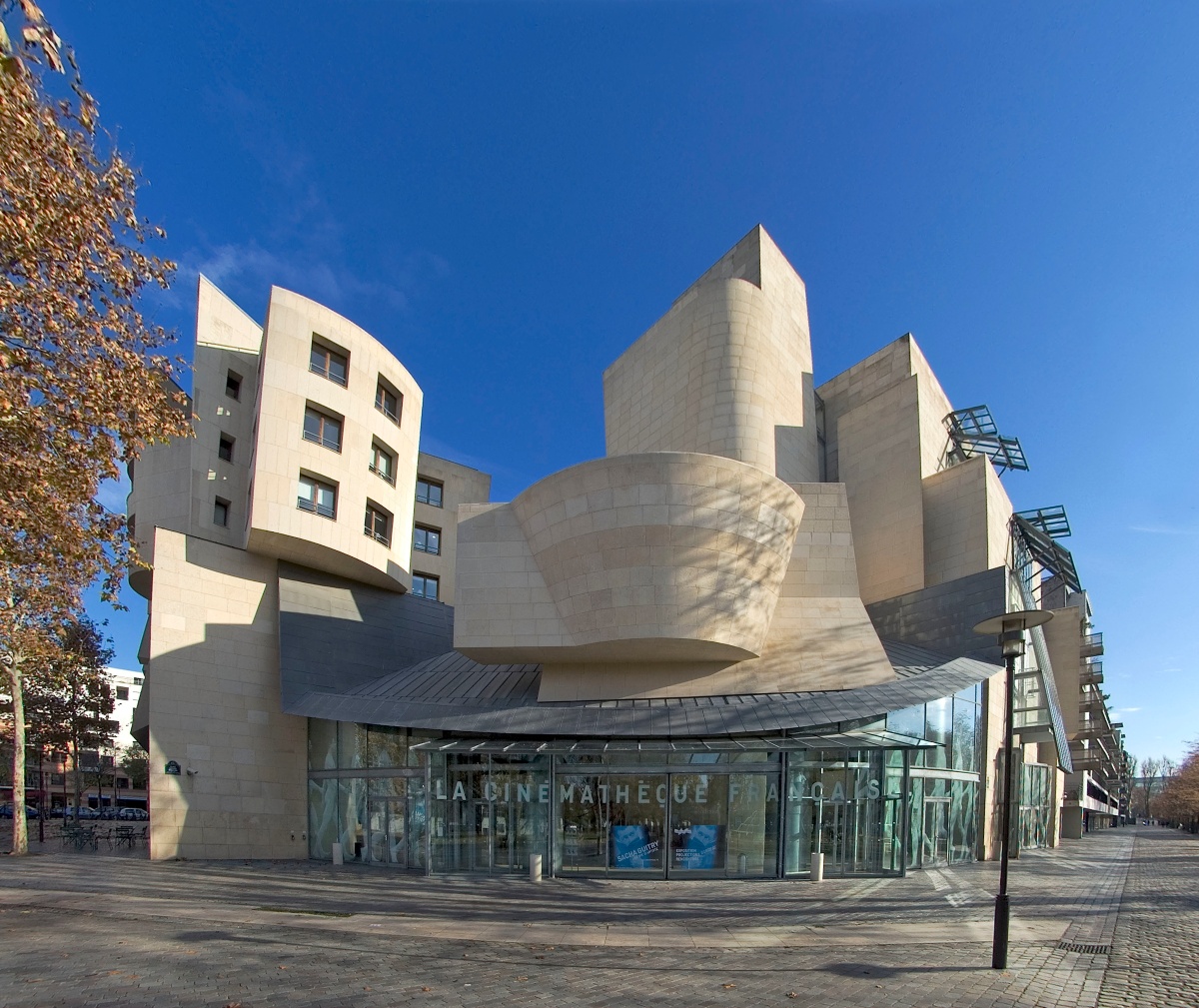
Cinephiles will adore the Cinémathèque Française, located on the river inside the Parc de Bercy in the 12th arrondissement. The museum celebrates the history and art of moviemaking through exhibitions, screenings and a collection devoted to all things cinematic. The youth programming is also worth a close-up. Workshops and courses introduce children and teens to filmmaking, animation, special effects and visual storytelling, making this a great choice for kids curious about what happens behind the camera.
When you’re finished, head outside to Parc de Bercy, a 35-acre green space built on the site of Paris’s former wine warehouses, where kids can find playgrounds, gardens, ponds and plenty of outdoor exploration. Look down and you may even spot old railway tracks once used to transport barrels of wine.

Send us a quick inquiry, and we’ll pair you with an expert Travel Advisor who can handle all your trip details: a custom-designed itinerary, private guides and experiences, and vetted accommodations, often with valuable perks to pass along.
This is one of my favorite under-the-radar choices for families. Tucked into the northern Marais in the 3rd arrondissement, the Musée des Arts et Métiers traces centuries of science, engineering and invention through machines, scientific instruments, early automobiles, aircraft and other objects that show how humans figured things out long before we could ask Google. You’ll also find Foucault’s Pendulum here. But one of the best surprises is the setting: Part of the museum occupies the former church of Saint-Martin-des-Champs, where historic vehicles and aircraft appear beneath the vaulted ceiling.
If you have a child who asks, “How does that work?” approximately 47 times a day, bring them here.
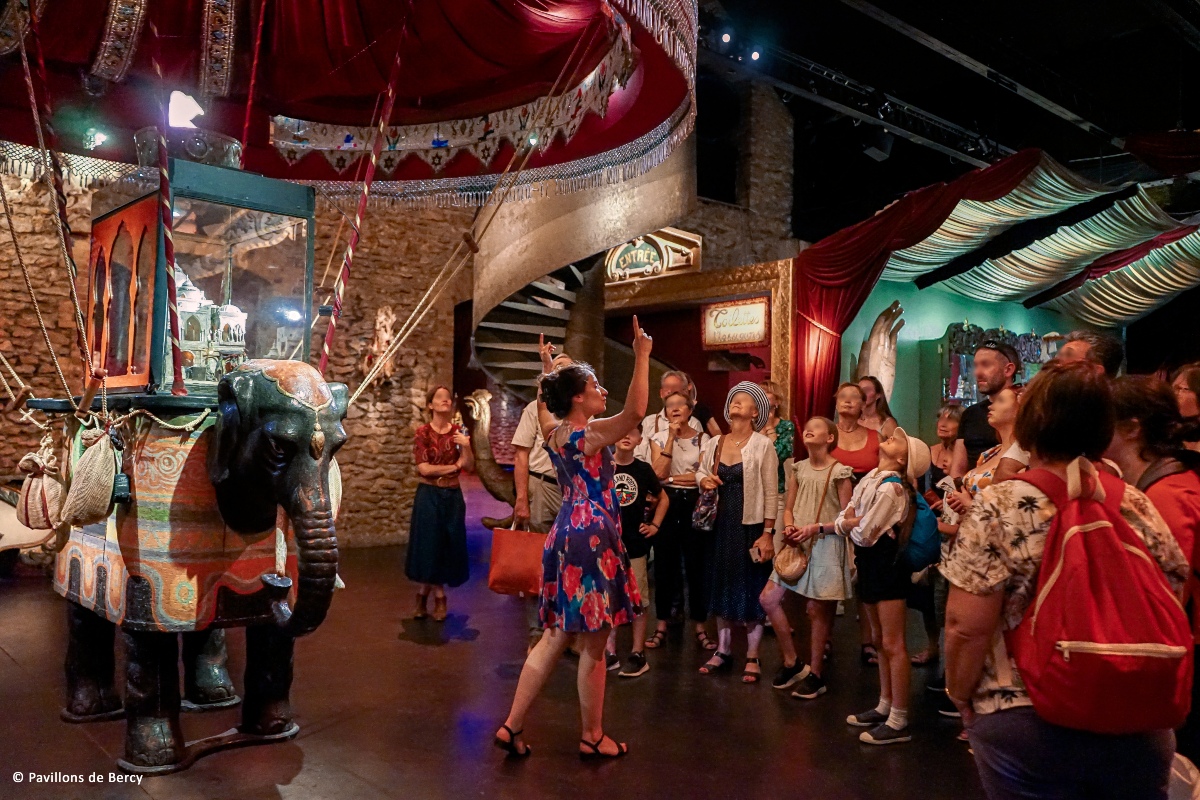
This may be one of my favorites, and one kids will probably talk about long after they’ve forgotten which Monet they saw. The Musée des Arts Forains at the Pavillons de Bercy, also in the Parc de Bercy, is a fantastical collection of historic fairground rides, carousels, games, theatrical objects and other pieces of European entertainment history, much of it dating to the 19th and early 20th centuries. It’s housed in former wine warehouses and feels a little like wandering backstage after an elaborate old Parisian carnival has closed up.
Unlike a conventional museum, however, you can’t necessarily wander in whenever you like. Public visits are offered year-round, but only by advance reservation on a guided tour. There is no self-guided admission, so this is one visit you’ll want to plan ahead. Tours are designed for ages 5 and up.
TIP: Most tours are in French (with English handouts available), although English-language tours are offered during the summer.
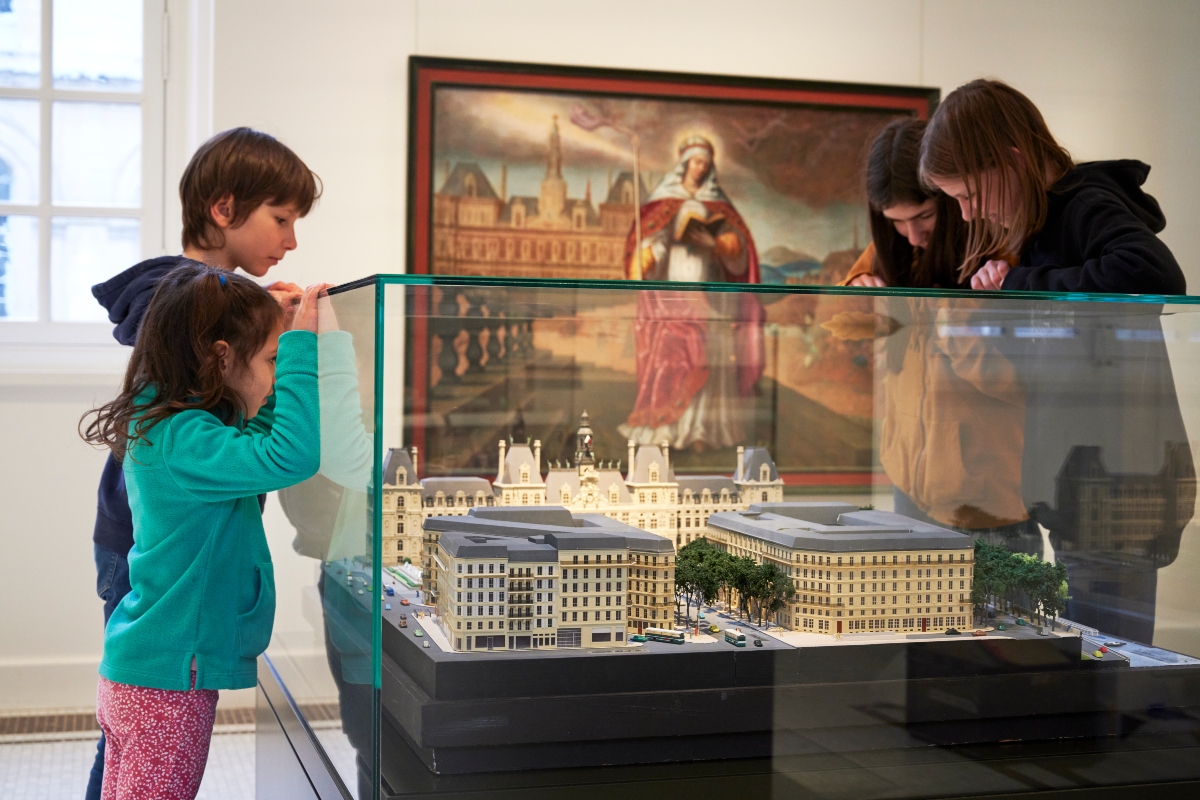
Kids can spend a Paris vacation walking past ancient buildings, statues and monuments without necessarily knowing what they mean. The Musée Carnavalet helps connect the dots.
Housed in two beautiful historic mansions in the Marais (3rd arrondissement), the museum tells the story of Paris through paintings, models, old shop signs, decorative rooms and everyday objects, as well as artifacts from major moments such as the French Revolution. Around 10 percent of the collection is displayed at a child’s eye level, and the museum offers activities designed both for and by children. It’s particularly good for school-age kids who are beginning to understand that Paris wasn’t always cafés, croissants and souvenir Eiffel Towers. The permanent collection is also free.
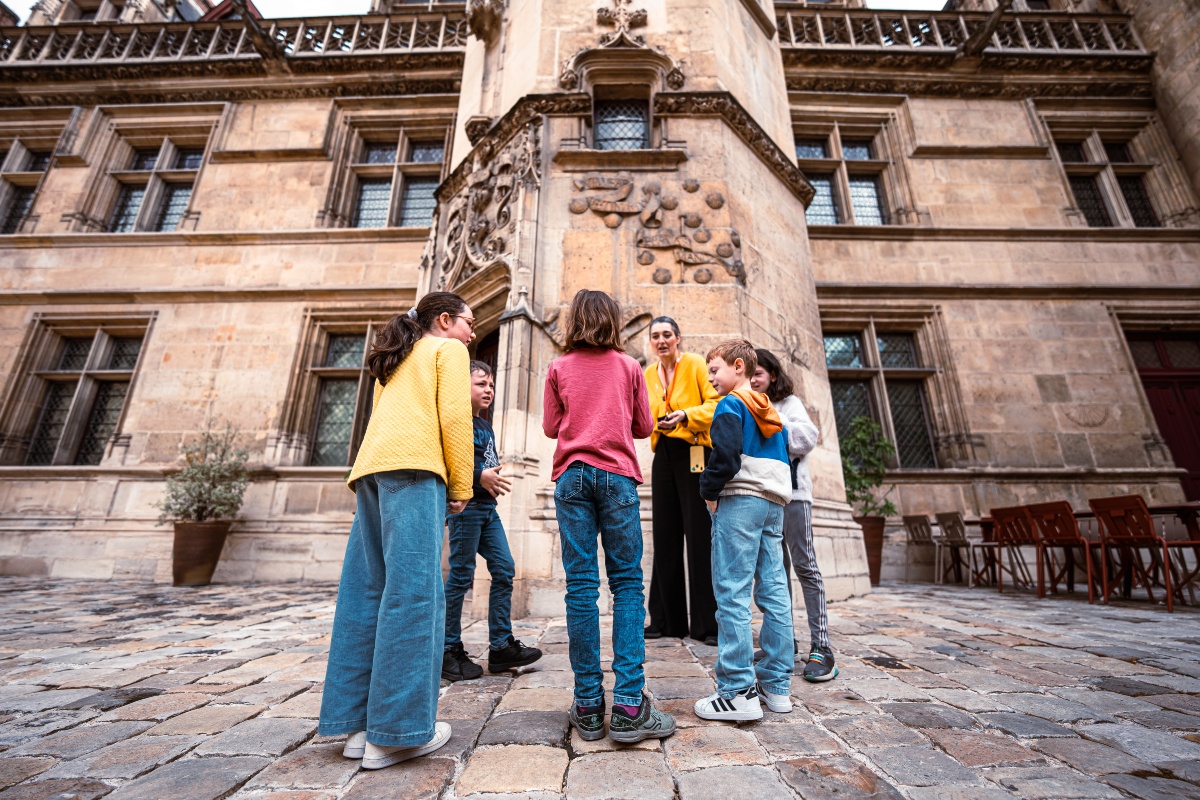
If Impressionism gets a shrug but knights and unicorns get a curious eyebrow raise, head to the Musée de Cluny — Musée National du Moyen Âge, France’s national museum of the Middle Ages (5th arrondissement). Even the building is part of the story. The museum incorporates ancient Gallo-Roman baths and the medieval Hôtel de Cluny, making it feel very different from Paris’s grand palace museums.
Inside are sculptures, stained glass, gold and jeweled objects, everyday items, and toys and games from the Middle Ages, plus the spectacular Lady and the Unicorn tapestries. Kids drawn to knights will also find weaponry, shields and objects associated with combat and chivalry.
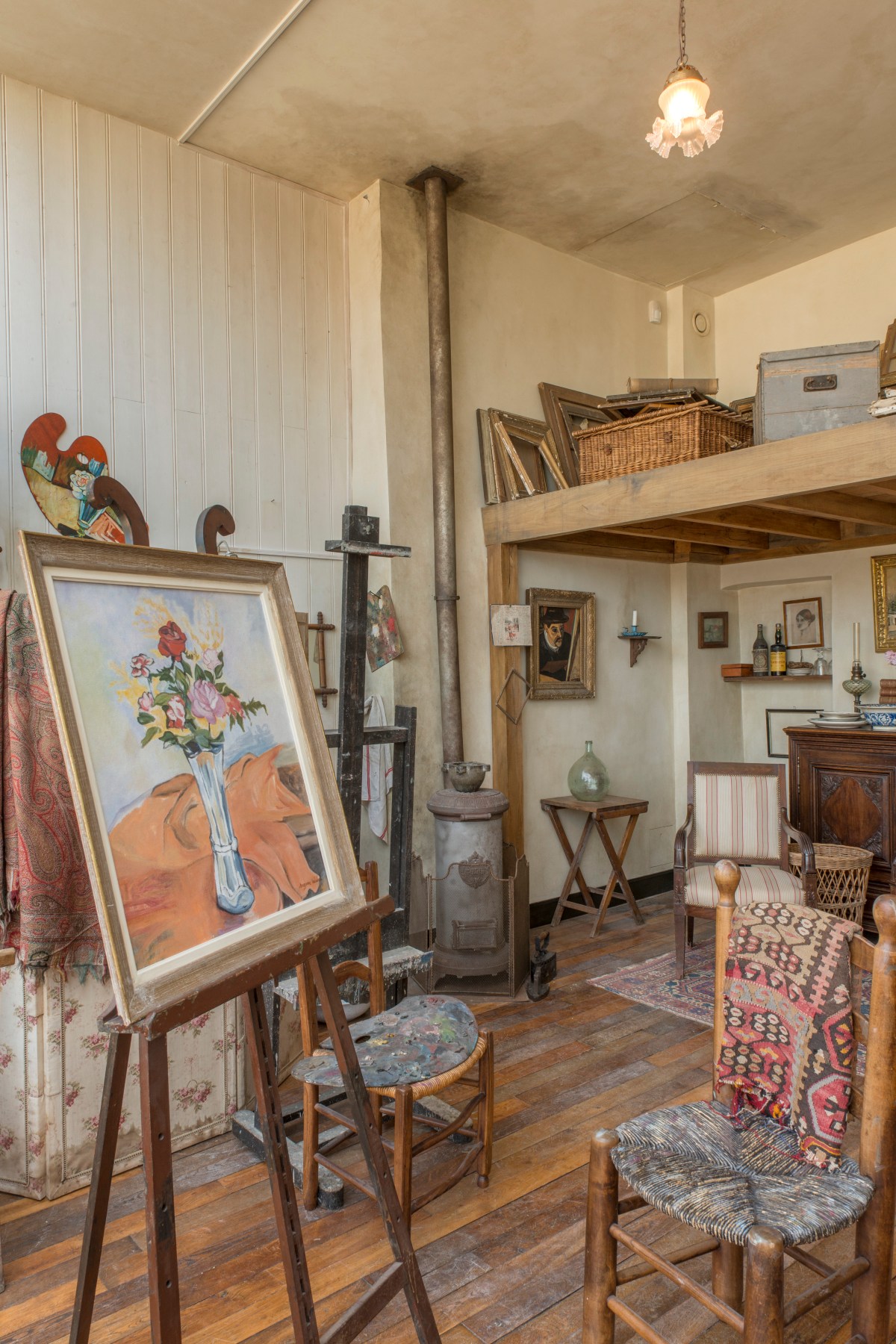
With so many enormous Paris museums, there is something deeply appealing about one you can visit without consulting a floor plan the size of a bedsheet. Renoir once lived and worked in the building that now houses the Musée de Montmartre (18th arrondissement), where he painted several works, including The Swing and Bal du Moulin de la Galette (the latter is the name of a beloved restaurant in the neighborhood that’s worth a reservation). Families can peek inside recreated artist studios, discover the quirky shadow theater from the famous Chat Noir cabaret and wander through the Renoir Gardens overlooking Montmartre’s tiny vineyard. The museum also offers family tours and children’s art workshops.
Make the museum part of a bigger Montmartre adventure: Wander the cobbled streets, ride the carousel below Sacré-Cœur, climb up to the basilica for the sweeping view across Paris and stop at Place du Tertre, where artists still set up their easels. Have a caricature or portrait drawn of the family, and you’ve got a much more entertaining souvenir than another Eiffel Tower keychain. It’s art, history and a little old-school Paris fun rolled into one very manageable outing.
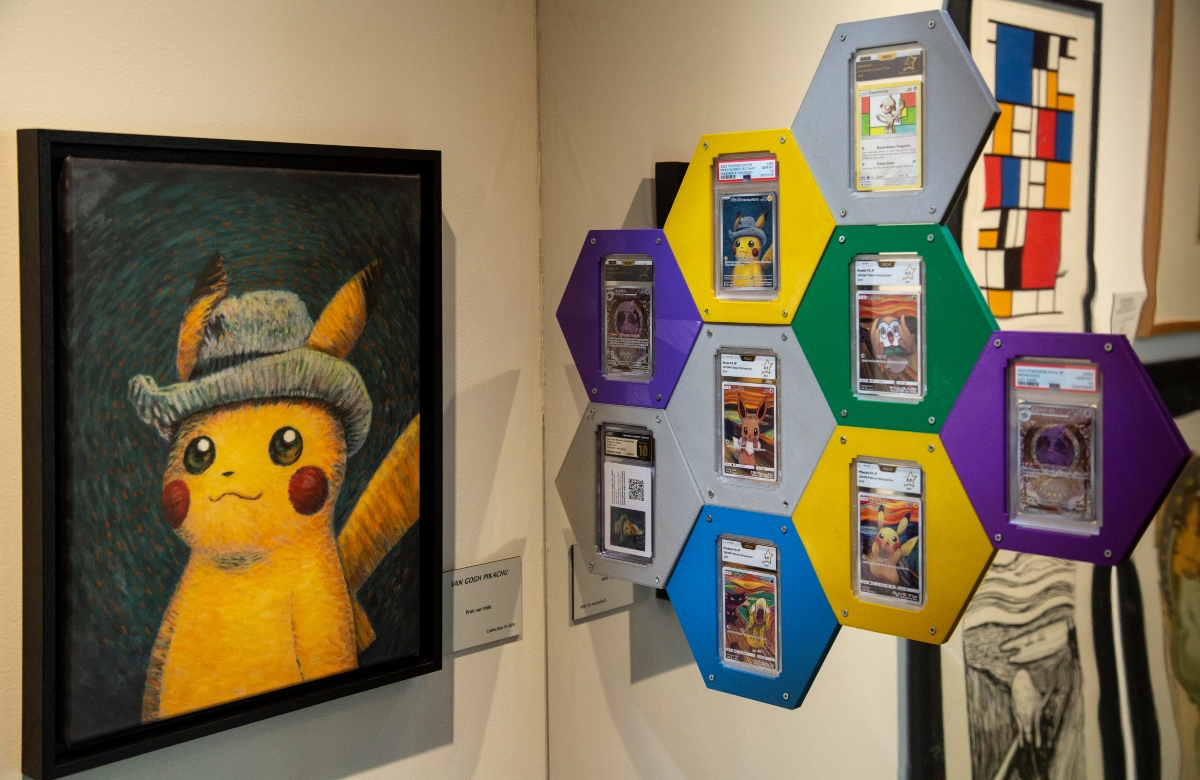
Just a short walk from the Louvre in the 1st arrondissement, the Musée en Herbe bills itself as an art museum for visitors “from 3 to 103,” which pretty much sums up its playful approach. Exhibitions are designed to be interactive rather than hands-off, with treasure hunts, games and activities that encourage children to really look at the art. Creative workshops let younger visitors try techniques such as painting, modeling and collage inspired by the works they’ve just seen. It’s small, fun and a refreshing alternative to Paris’s more serious art museums.
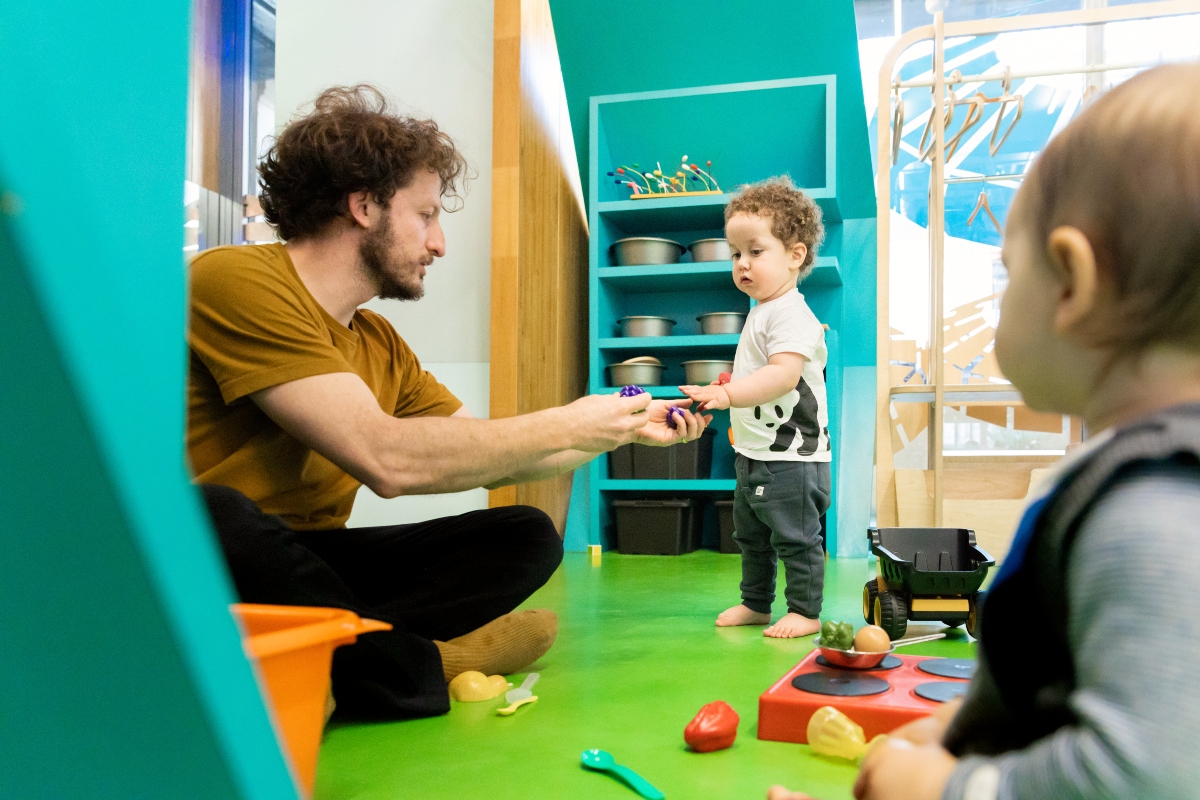
Toddlers have strong opinions about museums. Usually, those opinions involve leaving. At CENTQUATRE-PARIS, a sprawling contemporary arts center in the 19th arrondissement, La Maison des Petits gives families with very young children a cultural stop designed specifically for them.
The colorful space welcomes children from birth to age 5, accompanied by an adult. Kids can draw, read, play and explore while parents get to experience a contemporary Paris arts center well beyond the usual tourist circuit.
The biggest mistake families make isn’t taking children to museums. It’s expecting them to experience museums like adults.
You don’t need to see every room. You don’t need to read every plaque. And you definitely don’t need to get your money’s worth by remaining inside until everyone is screaming on the floor. Mix a few famous masterpieces with something unexpected and some outdoor time, and the museums might turn out to be a highlight of your Paris trip.
Your children may not remember the name of every artist they saw in Paris. But they might remember the carousels, the elephants, the mummies and the water lilies — and, with any luck, that going to a museum in Paris was actually fun.
Relevant Links:
Browse all accommodations and activities in Paris on Ciao Bambino
52 tips for traveling in France with kids
Paris with kids: Guide to the 8 central arrondissements
What to do on a rainy day in Paris with young kids
Insider guide to visiting the Eiffel Tower with kids
Guide to visiting Paris with toddlers
Editor’s note: This post was accurate when published. We advise checking independently for the latest information and updates. Ciao Bambino does not accept responsibility or liability for any errors or omissions in, or for any actions taken based on, the information presented.


 travel recommendations, inspiring adventures, and exclusive travel offers
"*" indicates required fields
Want to save all the great intel and tips you are finding on Ciao Bambino? My Trip Planner allows you to bookmark articles, family-friendly hotel reviews, and family vacation packages. Simply click the heart icon on anything you want to save. Site registration is required to get started. Happy planning!
Please fillout the form below to create your free My Trip Planner account.