 Back
Back







 FACEBOOK
 Pinterest
 Instagram

 FACEBOOK
Pinterest
Instagram
FACEBOOK
Pinterest
Instagram
Paris may be known as the city of romance, but it can also be a wonderful destination for families traveling with babies. While dreams of going to the top of the Eiffel Tower at night and leisurely touring the Louvre sounds great, traveling with a baby to Paris requires special considerations beyond just which stroller to bring or where to purchase diapers. This updated guide offers proven strategies for ensuring a smooth and enjoyable Parisian adventure with your little one from parents who have been there, done that multiple times in Paris with kids.

Paris Charles de Gaulle Airport sits approximately 40 km from the city center, offering multiple transportation options that vary significantly in baby-friendliness. For the most stress-free arrival experience, you will definitely want to book a private car service before your trip.
Many companies offer car seats upon request, though quality and availability can be inconsistent. For peace of mind, bringing your own travel car seat may be the wisest choice, especially if you plan to use taxis or a rental car during your stay.
Alternatively, the direct RER B train connects the airport to central Paris, but navigating stairs and crowded platforms with luggage and a baby can be challenging.

Just send a quick request, and we’ll pair you with an expert Travel Advisor who can design and book your dream trip: a custom itinerary, private guides, immersive local experiences and handpicked hotels. Click to get started!
Finding familiar diaper brands like Huggies and Pampers is easy throughout Paris. Baby food, including organic options, is readily available in supermarkets of all sizes, from the small neighborhood Monoprix to larger Carrefour locations across the city.
Formula brands differ from those in North America and other regions, so if your baby uses formula, consider bringing enough for your trip or pack the label from your preferred brand. Parisian pharmacies (marked by green crosses) are a great resource for baby supplies and can help you find suitable alternatives if you show them your usual product’s label.
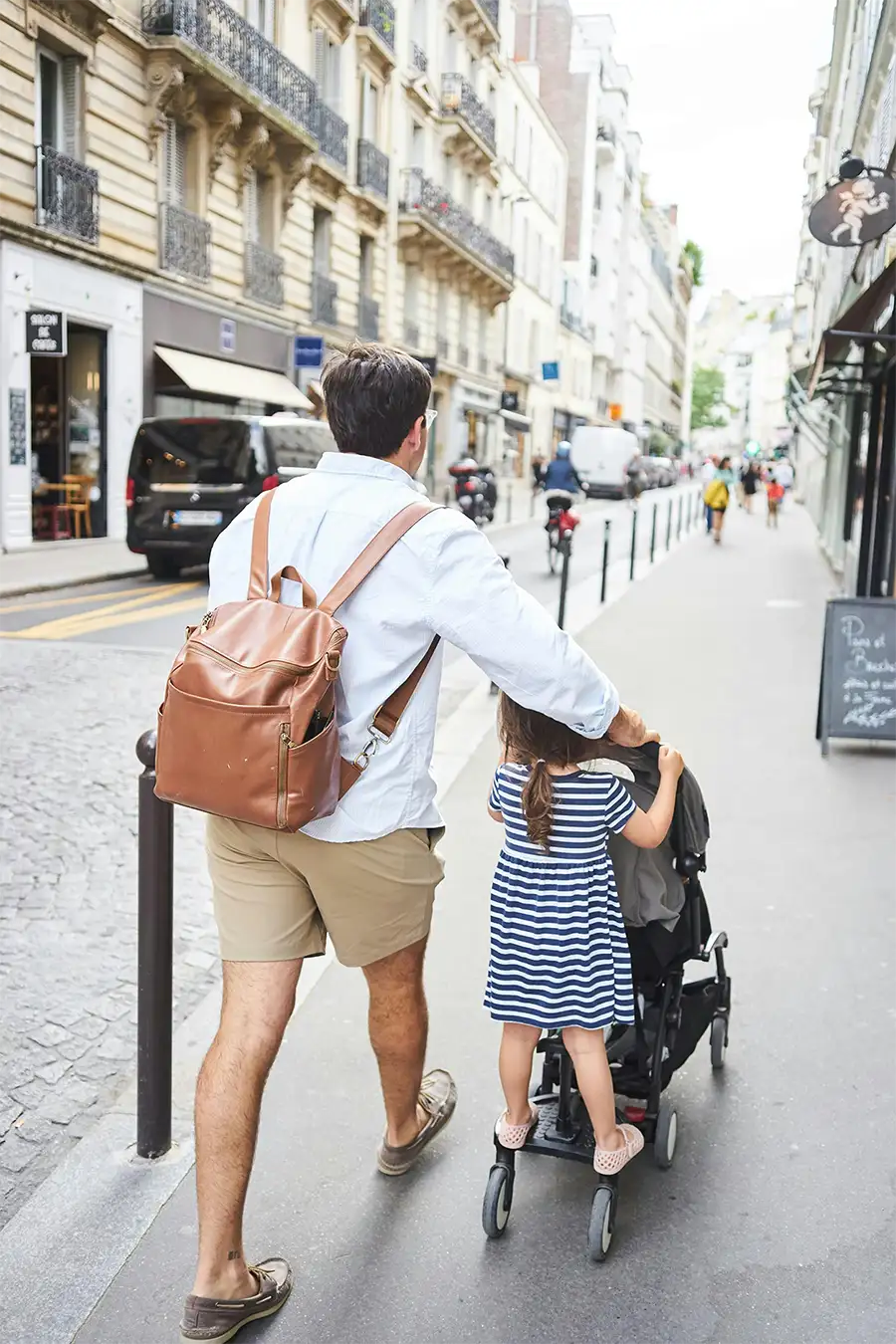
A lightweight, easily foldable stroller is a must if you plan on navigating Paris’s often narrow and sometimes uneven sidewalks. You’ll frequently encounter a few steps to enter museums, the public metro system, cafés and restaurants, requiring you to lift both baby and stroller.
The Eiffel Tower specifically prohibits non-folding strollers, making this attraction an ideal time to use a baby carrier. For older babies who can sit upright, a compact umbrella stroller proves invaluable for Paris’s historic streets, crowded attractions, and babies who want to get out to toddle around for a bit.
TIP: Consider bringing a stroller rain cover as well, regardless of season, as Paris weather can change quickly.

While Paris boasts an extensive public transit network, it presents challenges for families with strollers. The metro system was largely designed before accessibility became a priority, meaning only about half the stations offer escalators and even fewer have elevators. When using the metro, be prepared to carry your baby and folded stroller up and down stairs.
As you can imagine, many Parisian families with babies prefer buses over the metro, and here’s why:
Buses have become increasingly stroller-friendly — you can board through the rear door (signal the driver) and find dedicated spaces for strollers. For babies and toddlers under 4 years old, public transportation within the Paris region is free. The newer tram lines circling the outer arrondissements are fully accessible and worth considering if your itinerary allows.

Paris boasts more than 400 parks and public gardens, ranging from the expansive and famous Jardin du Luxembourg and Jardin des Tuileries to charming neighborhood squares. When selecting a hotel or apartment rental, proximity to a park offers valuable outdoor space for your baby.
Many parks feature age-appropriate playgrounds with dedicated areas for children as young as 18 months, or at minimum, baby swings. Parks also provide comfortable benches for feeding breaks and often include clean public toilets.
The Jardin d’Acclimatation in the Bois de Boulogne is particularly baby-friendly, with gentle rides suitable for even the youngest visitors. Parks typically open around 8 am and close at sunset, with extended hours during summer.

While few Parisian restaurants offer baby amenities like highchairs and changing tables, most establishments warmly welcome families and willingly accommodate babies. Staff will typically help make space for your stroller, warm bottles or baby food, and create a comfortable experience. If you have a packable highchair or seat harness, consider wearing your baby to the restaurant and then popping them into their own seat instead of dealing with a stroller.
Many Parisian parents bring babies to restaurants, so don’t feel self-conscious about doing the same. Keep in mind that Parisians generally dine late, with dinner service beginning around 7:30-8:00 pm, so arriving before this rush will give you a quieter atmosphere for you and your baby. If the weather is nice, check out one of the cafés with outdoor terraces that often provide more space for strollers and a relaxed environment for feeding.

Hotels typically offer travel cribs upon request, suitable for families with one baby. For those traveling with multiple children or desiring more space, apartment rentals or apart-hotels with kitchenette facilities may be a better alternative. Not only will you have more space, but you will also have more flexibility with meals and sleep schedules.
When booking accommodations, consider proximity to parks, grocery stores and key attractions to minimize transit time. Ground-floor apartments or buildings with elevators will make coming and going with a stroller so much easier.
We almost always rent an apartment if we are staying in Paris more than one night. By working with an experienced CB Travel Advisor, you’ll find vetted, quality accommodations maintained by reputable agencies, not random apartments that you aren’t sure will exist when you arrive. Request accommodations with bathtubs rather than shower-only bathrooms, as these make bathing babies much simpler.
And we can’t stress this enough … check to see if there is an elevator if you are booking a hotel or renting a flat on a high floor. You do not want to have to drag a baby and bags up five flights of steps every time you go out.

Paris’s world-class museums vary in their stroller policies. The Louvre and Musée d’Orsay generally allow strollers in most areas, while smaller museums may request you check them. Research policies in advance or inquire at entrances. Many museums that restrict strollers offer complimentary baby carriers, though bringing your own ensures comfort, availability and a more sanitary experience (who knows what a baby was up to in it last!).
One pro-parent tip is to visit museums during naptime when your baby might sleep in the carrier or stroller, allowing you to enjoy the art in relative peace. Most major museums offer nursing rooms or quiet spaces where parents can tend to babies.
Wondering where to travel — and when — for the best possible family vacation? Download our free guide and get expert recommendations for every month of the year, including ideal seasons and standout experiences worth planning a trip around.
While finding changing facilities can be challenging in Paris, the situation has improved in recent years. Major department stores, like Galeries Lafayette and Printemps, provide baby-changing facilities, as do newer shopping centers.
Public toilets rarely include changing tables, so packing a lightweight, portable changing mat enables diaper changes almost anywhere discreet.
Parisians are generally understanding about parents needing to care for babies. Look for the family-friendly “Famille” certification on restaurants and attractions, which indicates they provide at least basic facilities for families. Museums typically offer better changing facilities than restaurants or cafés.
While public breastfeeding remains less common in France than in some other countries, you can confidently feed your baby wherever needed. For more privacy, parks offer peaceful settings, and department stores typically provide dedicated nursing rooms. A lightweight nursing cover might provide additional comfort if desired, though it’s not necessary.

Paris offers excellent shopping for baby necessities and delightful souvenirs. Pharmacies carry premium baby skincare products from French brands like Mustela and Bioderma. Department stores like BHV Marais and Le Bon Marché feature extensive children’s departments with high-quality clothing and toys. Monoprix, found throughout the city, offers affordable baby essentials and clothing.
For memorable souvenirs, specialty children’s boutiques in the Marais district and near the Luxembourg Gardens carry unique French-made items, while Bonpoint represents the height of Parisian children’s fashion.
French parenting styles may differ somewhat from what you’re accustomed to at home. French children typically integrate into adult environments from an early age, expected to adapt to restaurants and public spaces rather than those spaces adapting to children. This cultural approach means babies are welcome almost everywhere but also explains the limited baby-specific amenities.
The French generally admire well-behaved children and appreciate parents’ efforts to manage fussiness discretely. A smile and basic French phrases like “Excusez-moi” (Excuse me) or “Merci pour votre patience” (Thank you for your patience) go a long way if your baby becomes uncomfortable in public spaces.

Perhaps the most crucial tip for visiting Paris with a baby is to plan a realistic itinerary. Schedule one major activity per day, allowing ample time for feeding, naps and unexpected delays. Alternate museum days with more relaxed park or neighborhood exploration.
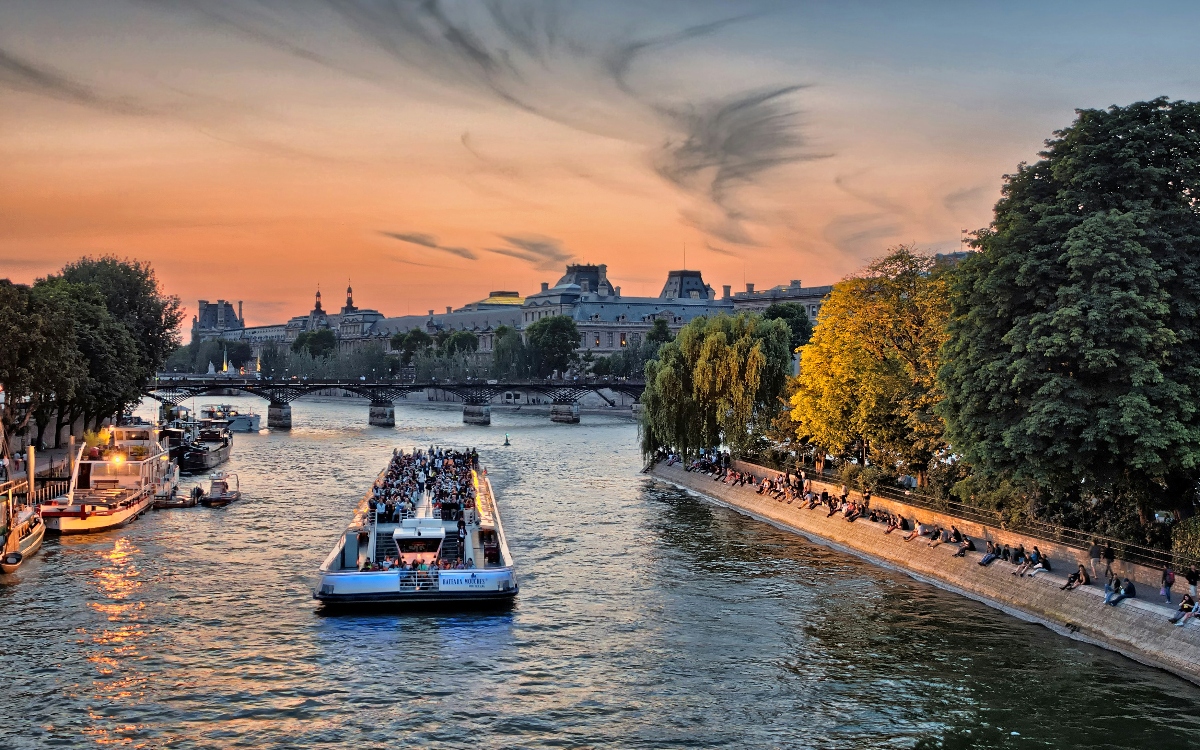
Most Parisian attractions are centuries old and weren’t designed with baby logistics in mind, so everything will take longer than you’d expect. Remember that the journey — strolling along the Seine, pausing in charming squares, discovering neighborhood bakeries — is as much a part of the Parisian experience as visiting iconic landmarks. Embracing this slower pace may just make a trip to Paris the best vacation you ever had.
This is a guest post by Keryn Means, founder of TwistTravelMag.com, and Camille Spanjaard, founder of baby’tems, a baby equipment rental and supply company in Paris, France.
Relevant Links:
Browse all family-friendly hotels and activities in Paris on Ciao Bambino
52 tips for traveling in France with kids
Guide to visiting Paris with toddlers
What to do on a rainy day in Paris with young kids
Paris with kids: Guide to the 8 central arrondissements
Insider guide to visiting the Eiffel Tower with kids
Europe with a baby: How to make it (almost) stress-free
Editor’s note: This post was accurate when published. We advise checking independently for the latest information and updates. Ciao Bambino does not accept responsibility or liability for any errors or omissions in, or for any actions taken based on, the information presented.


 travel recommendations, inspiring adventures, and exclusive travel offers
"*" indicates required fields
Want to save all the great intel and tips you are finding on Ciao Bambino? My Trip Planner allows you to bookmark articles, family-friendly hotel reviews, and family vacation packages. Simply click the heart icon on anything you want to save. Site registration is required to get started. Happy planning!
Please fillout the form below to create your free My Trip Planner account.
Hotel rooms are very small – pack light
Traditionally, hotels rooms in Europe are small, at least when compared to North American hotels. But in Paris, they are extremely small. Add a crib to the mix and there is literally no room to move, let alone space for baby to crawl around and stretch his legs.
We spent a long time searching before deciding on our Paris accommodations. We booked a triple room with hopes that it would provide more space for a crib. We did manage to get the crib in the room but just barely! And it took some rearranging to fit our luggage in the room and we had to leave our stroller and car seat in the hallway!
Thank you for the great tips! My husband and I traveled to Paris for our honeymoon 3 years ago and had a wonderful time! We are wanting to take our daughter, now 18 months, but weren’t sure on the “details” of Paris with a toddler; thanks again!
– Alex
(Chilliwack, BC, Canada)
Thanks Anna & Alicia.
@Alicia : when planning your trip, don’t hesitate to contact me, I’ll be happy to help !
Wow you said it all. This material is very complete and useful indeed. Paris is my dream trip with my husband and it is really an accomplishment on our part if we will be able to go there by 2012. We have been targeting this trip for a long time and hopefully we will finally make it.
This is a really useful post, thanks. Paris is such a beautiful city and I certainly hope to take my boy there some day.